

I’ve always wondered about the hair growth differences between men and women. Research shows men’s hair grows a bit faster, about 0.5 to 1.7 centimeters each month. Hormones and genetics are key factors in this.
Hormones, like testosterone, help men’s hair grow faster. But, hair growth changes with age. It grows the fastest between 15 and 30, then slows down. Knowing this can help us take care of our hair better.
Key Takeaways
- Men’s hair grows slightly faster than women’s, with an average rate of 0.5 to 1.7 centimeters per month.
- Hair growth rates can vary significantly across different age groups.
- Hormone influence, such as testosterone, plays a significant role in determining hair growth rates.
- Genetic factors also contribute to hair growth differences between men and women.
- Understanding hair growth rates and factors that influence them can help individuals promote healthy hair growth.
- Hair growth rates can be affected by various factors, including hair growth cycles and nutritional components.
Understanding the Basics of Hair Growth
To understand hair growth, we need to know about the hair growth cycle. It has four stages: anagen, catagen, telogen, and exogen. The anagen phase is when hair grows fast, lasting 2 to 8 years for scalp hair. During this time, hair follicles are making hair, with 85% to 90% of head hairs in this stage.
The hair growth rates change with each cycle stage. For example, the catagen phase is just 2 weeks, and the telogen phase is 2 to 3 months. Knowing these stages helps spot problems and support healthy hair growth. Things like nutrition, stress, and hormones also affect hair growth rates.
Here’s a quick look at the hair growth cycle stages:
- Anagen phase: 2 to 8 years
- Catagen phase: 2 weeks
- Telogen phase: 2 to 3 months
- Exogen phase: variable, but typically involves the shedding of hair
Understanding the hair growth cycle and its stages helps us promote healthy hair. It’s key to know about the anagen phase and telogen phase to keep our hair follicles and hair growth rates healthy.
Who’s Hair Grows Faster Men or Women: The Scientific Answer
The debate on hair growth rates between men vs women has been long-standing. Scientific studies show men’s hair grows about 0.75mm per month faster than women’s. This is mainly due to testosterone, which boosts hair growth.
Research finds the anagen phase, the growth phase, lasts two to six years in humans. On average, hair grows about 1 cm per month. Yet, scientific studies reveal men’s hair grows slightly faster than women’s.
- The thickness of hair influences its growth rate, with thicker hair growing faster.
- Hair shedding due to various factors can affect hair growth rates.
- Hormone influence plays a significant role in determining hair growth rates.
In conclusion, while men vs women have different hair growth rates, scientific studies suggest men’s hair grows slightly faster. This is thanks to testosterone’s hormone influence. Knowing these factors can help individuals care for their hair better and promote healthy hair growth rates.
The Role of Hormones in Hair Growth
Hormones are key in hair growth. Testosterone and estrogen are the main players. Testosterone helps men grow hair, while estrogen does the same for women. But, an imbalance can cause hair loss or slow growth.
DHT, a testosterone byproduct, can also lead to hair loss, especially in men. Knowing how hormones affect hair growth helps us find and fix problems. For example, research has shown that IGF-1 boosts hair follicle growth, while TGF-beta slows it down.
Here are some important points about hormones and hair growth:
- Testosterone and estrogen are the primary hormones involved in regulating hair growth
- DHT, a byproduct of testosterone, can contribute to hair loss
- Insulin-like growth factor (IGF-1) stimulates hair follicle growth
- Transforming growth factor-beta (TGF-beta) inhibits hair follicle growth
| Hormone | Effect on Hair Growth |
|---|---|
| Testosterone | Stimulates hair growth in men |
| Estrogen | Promotes hair growth in women |
| DHT | Contributes to hair loss, particularly in men |
By knowing how hormones affect hair growth, we can work on keeping our hair healthy and address any issues.
Genetic Factors Affecting Hair Growth Speed
Exploring hair growth, I’ve found that genetic factors are key. Our inheritance shapes how fast our hair grows. Some people naturally grow hair faster or slower because of their DNA.
Studies show that genetic factors can change hair growth rates. This means our hair growth isn’t just about hormones and lifestyle. It’s also about our genes. For example, some might grow hair faster or slower because of their genes.
Knowing about genetic factors in hair growth helps us set realistic goals. It lets us focus on other important factors like hormones and health. This way, we can care for our hair better and keep it healthy and beautiful.
Here are some important points about genetic factors and hair growth:
- Genetic factors can influence hair growth rates, with some people inheriting faster or slower growth rates from their parents.
- Our inheritance can affect the speed at which our hair grows due to our unique DNA.
- Understanding the role of genetic factors in hair growth can help us set realistic expectations and take steps to promote healthy hair growth.
Age-Related Changes in Hair Growth Patterns
As we age, our hair growth patterns change a lot. In the teenage years, hair grows faster. Many people see their hair grow quickly during this time. But, as we get older, hair growth slows down, and some may lose hair or see it thin out.
In the senior years, hair growth gets even slower. This can make hair thinner or more brittle. Knowing these changes helps us take care of our hair better. For example, eating well and staying healthy is key for fast hair growth in the teenage years.
Here are some key age-related changes in hair growth patterns:
- Teenage years: faster hair growth rates
- Adult years: slower hair growth rates, potential hair loss or thinning
- Senior years: significant slowdown in hair growth rates, thinner or more brittle hair
https://www.youtube.com/watch?v=Reu5AliPBmw
By understanding these changes, we can keep our hair healthy at any age. Eating right, exercising, and taking good care of our hair are all important. Knowing how age affects hair growth helps us make better choices for our hair health.
| Age Group | Hair Growth Rate | Hair Texture |
|---|---|---|
| Teenage years | Faster | Thicker, coarser |
| Adult years | Slower | Thinner, finer |
| Senior years | Significantly slower | Thinner, more brittle |
The Impact of Lifestyle on Hair Growth Speed
Lifestyle plays a big role in how fast your hair grows. Eating right and staying active can help a lot. Also, managing stress is key to keeping your hair healthy. Let’s look at how lifestyle choices can speed up hair growth.
Diet and Nutrition
Eating foods full of vitamins and minerals is important for hair. A study found that eating foods rich in vitamin E can make hair grow 34% faster. Iron is also key, as low levels can cause hair loss, especially after having a baby.
Exercise and Blood Circulation
Working out regularly can boost blood flow, which helps hair grow. It also lowers stress, which can cause hair loss. Adding exercise to your day can help your hair grow stronger.
Stress Management
Too much stress can make you lose more hair. Doing things that calm you down, like meditation or yoga, can help. By keeping stress low, you can help your hair grow better.
Living a healthy lifestyle is key for hair growth. This means eating well, exercising, and managing stress. A healthy lifestyle is the best way to keep your hair looking great.
| Lifestyle Factor | Impact on Hair Growth |
|---|---|
| Healthy Diet | Promotes hair growth, reduces risk of hair loss |
| Regular Exercise | Improves blood circulation, reduces stress |
| Stress Management | Reduces risk of telogen effluvium, promotes healthy hair growth |
Common Myths About Gender and Hair Growth
Many myths surround hair growth differences between men and women. One myth is that men’s hair grows faster. But, the truth is, the difference is small. Hair growth rates vary a lot, no matter the gender.
Some myths say haircuts or special products can make hair grow faster. But, hair growth depends on genes, hormones, and lifestyle. For example, iron deficiency can cause hair loss, especially in women, because of menstrual blood loss.
Here are some key facts about hair growth and gender:
- Hair growth during the anagen phase can last anywhere from two to six years in humans.
- Genetic factors that influence hair growth rates can vary significantly between males and females.
- Testosterone levels, which are higher in men, play a significant role in promoting the anagen phase, leading to longer and thicker hair growth.
Good hair care practices, like using the right products and techniques, can greatly affect hair health. By knowing the facts and debunking myths, people can promote healthy hair growth and keep their scalp healthy.

In conclusion, myths about gender and hair growth can be misleading. By focusing on facts and holistic hair care, people can have healthy and vibrant hair, regardless of gender.
| Hair Type | Average Growth Rate |
|---|---|
| Asian | +/- 1.5 cm per month |
| Caucasian | +/- 1 cm per month |
| African-type | +/- 0.8 cm per month |
Essential Nutrients for Optimal Hair Growth
To grow healthy hair, knowing the key nutrients is important. Eating foods rich in vitamins, minerals, and protein helps a lot. For example, vitamins like biotin, vitamin E, and vitamin C boost hair growth and keep follicles healthy.
Minerals like zinc and iron are also key for hair health. Zinc aids in hair repair and growth. Iron helps prevent hair loss. Eating foods high in these minerals can prevent deficiencies.
Vitamins for Hair Health
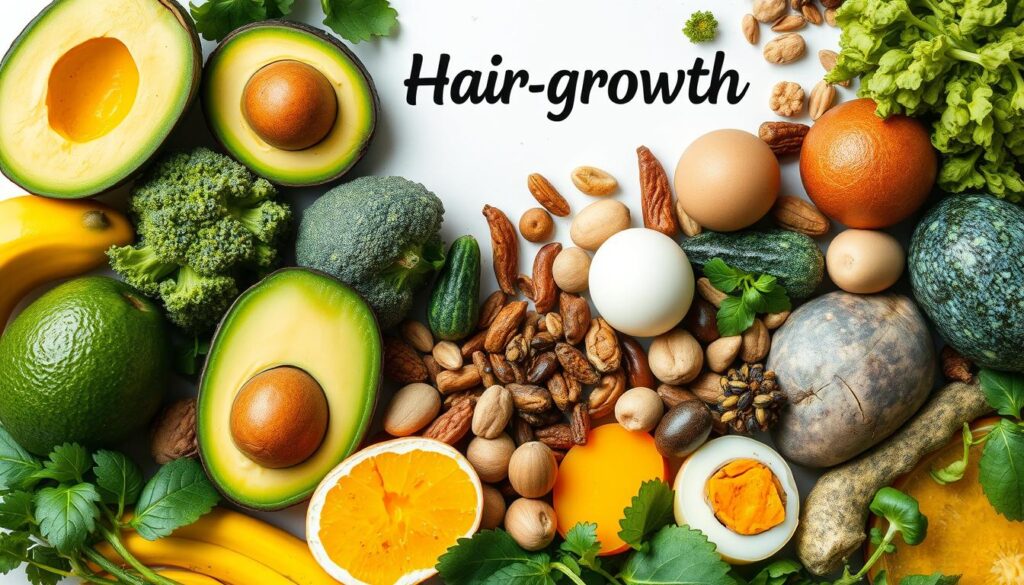
Vitamins are crucial for hair growth. Biotin, for instance, helps turn protein into energy for hair. Foods like eggs, strawberries, and spinach are full of biotin and other vitamins good for hair.
Minerals That Matter
Minerals like zinc and iron are vital for healthy hair. Zinc supports hair repair and growth. Iron helps prevent hair loss. Eating zinc-rich foods like oysters and iron-rich foods like black beans supports hair health.
Protein Requirements
Protein is essential for hair growth. It provides the necessary building blocks for hair development. Foods like eggs, almonds, and sunflower seeds are great for hair health.
| Food | Nutrient | Benefit for Hair |
|---|---|---|
| Eggs | Protein, Biotin | Supports hair growth and strength |
| Strawberries | Vitamin C | Enhances collagen production for hair strength |
| Spinach | Vitamin A | Critical for hair growth and health |
Natural Methods to Enhance Hair Growth
Exploring hair growth, we find natural methods are key. Scalp massage boosts blood flow and supports follicles. Aromatherapy, too, is a natural remedy that fights stress, a major hair loss cause.
Other natural methods include essential oils like rosemary and lavender. Herbal remedies like saw palmetto also help. They reduce inflammation and improve scalp health. Eating a balanced diet with zinc, biotin, and iron is crucial for hair health.
Regular exercise and managing stress also aid hair growth. By adding these natural remedies to our daily life, we support healthy hair. These natural methods are great for enhancing hair growth or keeping the scalp healthy.
Professional Treatments and Their Effectiveness
Professional treatments can help stimulate hair growth. These include medical interventions and salon treatments. Even at-home products can be effective.
Medical treatments like hair transplantation and platelet-rich plasma therapy can help. Salon treatments, such as hair extensions, can also promote hair growth.
Some popular treatments for hair growth include:
- Low-level laser therapy (LLLT)
- Minoxidil
- Finasteride
- Platelet-rich plasma therapy
These treatments can be used alone or together for better results. It’s important to talk to a healthcare professional or dermatologist to find the right treatment for you.
At-home professional products can also help with hair growth. They often have ingredients like minoxidil, biotin, and keratin. Using these products daily can support hair growth and make your hair healthier and fuller.
| Treatment | Effectiveness | Side Effects |
|---|---|---|
| Minoxidil | High | Mild irritation, excess shedding |
| Finasteride | High | Low libido, erectile dysfunction |
| Platelet-rich plasma therapy | Moderate | Pain, swelling, bruising |
Hair Care Routines for Different Genders
Men and women have different hair care needs. It’s important to understand these differences. Men often deal with dandruff and itchiness, while women face dryness and frizz.
Research shows that men and women can grow hair at the same rate. But, men’s hair follicles are denser, making it seem like their hair grows faster. To meet your hair’s needs, consider these tips:
- Use gentle shampoo and conditioner suitable for your hair type
- Avoid excessive heat styling and use a heat protectant when necessary
- Get regular trims to prevent split ends and breakage
Eating a healthy diet and staying active are key for hair health. Getting enough sleep also helps. By following these tips, you can keep your hair healthy and address any issues.
Remember, everyone’s hair is unique. What works for one might not work for another. Try different routines and products to find what suits you best. With patience and effort, you can have beautiful hair that shows off your style and personality.
| Hair Care Routine | Men | Women |
|---|---|---|
| Shampooing frequency | 2-3 times a week | 1-2 times a week |
| Conditioning | Once a week | Twice a week |
| Hair masks | Once a month | Once a week |
Measuring and Tracking Hair Growth Progress
It’s important to measure and track hair growth to spot issues early. Using a hair growth meter is a scientific way to do this. Taking photos and keeping a hair growth journal are also good at-home methods.
Some important facts to remember include:
- Hair grows about 6 inches a year or ½ inch a month.
- Most people lose 70 to 100 hairs daily.
- It’s best to measure hair growth once a month.
Knowing how to measure hair growth helps you find the best way to keep your hair healthy. By mixing scientific methods with at-home tracking, you can understand your hair better. This way, you can make smart choices for your hair care.
| Method | Description |
|---|---|
| Scientific Measurement | Using a hair growth meter to accurately measure hair growth. |
| At-Home Tracking | Taking progress photos and using a hair growth journal to track progress. |
| Regular Measurement | Measuring hair growth once a month to track progress. |
Conclusion
Understanding what makes hair grow is key to having the hair we want. It doesn’t matter if you’re a man or a woman. The path to great hair involves hormones, genetics, age, lifestyle, and what you eat. By using the tips from this article, you can help your hair grow stronger and healthier.
Hair growth is different for everyone. What works for one person might not work for another. The important thing is to be patient and try different things. Keep track of how your hair changes over time. With the right steps, you can make your hair look its best and feel more confident.
Keep learning about hair growth as you go. By staying up-to-date and taking a whole-body approach, you’ll get closer to your hair goals. Let’s work together to make your hair grow strong and healthy!
FAQ
Do men or women have faster growing hair?
Studies show men’s hair grows a bit faster than women’s. This is because men have more testosterone. But, hair growth can differ a lot between people. This depends on age, genes, and health.
How does the hair growth cycle work?
Hair grows in cycles: anagen (growth), catagen (transition), telogen (resting), and exogen (shedding). Knowing these stages helps find and fix hair growth problems.
What are the key factors that influence hair growth rates?
Hormones, genes, age, and lifestyle affect hair growth. Diet, exercise, and managing stress are important too.
How do hormones impact hair growth?
Testosterone boosts hair growth in men, while estrogen does the same in women. Hormone imbalances can cause hair loss or slow growth. DHT, a testosterone byproduct, also leads to hair loss.
Can genetics determine my hair growth rate?
Yes, genetics greatly influence hair growth rates. People inherit their growth rates from their parents. Some grow hair faster or slower naturally.
How do hair growth patterns change with age?
Teenagers often see fast hair growth. As adults, growth slows, and some may lose hair. In older age, hair growth slows down a lot, making hair thinner or more brittle.
What lifestyle factors can impact hair growth?
Eating well, exercising, and managing stress helps hair grow. Bad diet and stress can cause hair loss.
Are there any common myths about gender and hair growth?
Yes, one myth is that men’s hair grows faster than women’s. The truth is, the difference is small. Another myth is that hair growth is only about genetics. Lifestyle and hormones also matter.
What are the essential nutrients for hair growth?
Vitamins like biotin, vitamin E, and C, and minerals like zinc and iron help hair grow. Protein is key for hair development, as it’s the building block.
What natural methods can help enhance hair growth?
Scalp massage, aromatherapy, and essential oils and herbal remedies improve blood flow and reduce stress. This can stimulate hair growth.
What professional treatments are available for hair growth?
Treatments include hair transplantation, platelet-rich plasma therapy, and salon services like extensions. At-home products like minoxidil and biotin supplements also help.
How can I develop an effective hair care routine for my gender?
Men might focus on dandruff and itchiness, while women on dryness and frizz. A personalized routine based on your hair type and needs promotes healthy growth.
How can I measure and track my hair growth progress?
Use a hair growth meter or take photos and keep a journal at home. These methods help track growth and spot issues.
Source Links
- How the Hair Growth Cycle in Men is Different from Women
- How fast does hair grow? Facts and healthy hair growth tips
- The Biology of Hair Lengths: Why it’s Natural for Women to Have Longer Hair
- Stages of Hair Growth Plus How to Maintain Hair Health in Every Stage
- In brief: What is the structure of hair and how does it grow? – InformedHealth.org
- Why Do Men’s Hair Grow Faster Than Women’s
- Human hair growth
- Physiology, Hair – StatPearls – NCBI Bookshelf
- Hormonal Effects on Hair Follicles
- Effects of Hormones and Endocrine Disorders on Hair Growth
- Androgens trigger different growth responses in genetically identical human hair follicles in organ culture that reflect their epigenetic diversity in life
- Hair Growth Rate: Weekly and Monthly Growth Insights
- Aging changes in hair and nails: MedlinePlus Medical Encyclopedia
- Hair Aging in Different Races and Ethnicities
- Here’s What to Expect From Your Hair As You Age
- Why Do Men’s Hair Grow Faster Than Women’s
- How does our diet and lifestyle affect our hair growth?
- 10 Myths and Truths about Hair Loss
- Why Do Men’s Hair Grow Faster Than Women’s
- How To Grow Hair Faster ➤ Centre Clauderer | Hair Growth Tips
- Hair Growth Facts You Need To Know – L’Oréal Paris
- Best Foods for Hair Growth: What to Eat, Drink & Avoid
- Guide to Best Vitamins and Minerals for Hair Growth – ISHRS
- 6 Ways to Make Your Hair Grow Faster and Stronger
- 14 Ways to Help Your Hair Grow Faster and Stronger
- Why Do Men’s Hair Grow Faster Than Women’s
- Advances in hair growth – PMC
- FDA-Approved Hair Loss Treatments for Androgenic Alopecia – HairScience
- Why Do Men’s Hair Grow Faster Than Women’s
- Lordhair
- Wimpole Hair Transplant Clinic
- Hair Growth: Am I Coming up Short?
- Hair Evaluation Methods: Merits and Demerits
- Comparative study of male and female human hair: A microscopic analysis
- Hair Growth – Learn The Science That Determines How Fast Your Hair Grows — HairKnowHow.Com Professional Hair Testing Services – Hair Clinics, Trichologists & Private Clients


