


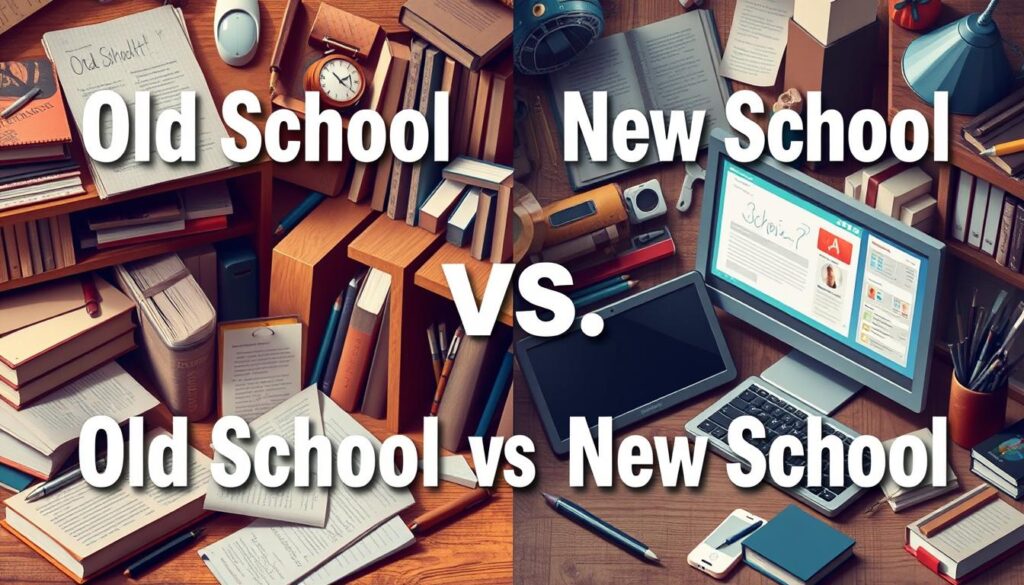
I looked into old school vs. new school study methods to see which one works best. The debate between traditional and modern education is interesting. Each has its own good points and bad points. So, which one is better for students? I want to explore this question in this article, looking at different study methods and education styles.
I aim to give students a clear view of the various study methods. This way, they can choose the best learning strategy for themselves. Whether it’s old school or new school, I want to help students decide what’s best for them.
Key Takeaways
- Understanding the evolution of study methods is key to finding the best approach.
- Traditional education offers benefits like face-to-face learning and hands-on activities.
- Modern education provides digital tools and resources, making learning easier and more convenient.
- Study methods can be adjusted to fit individual learning styles, whether old school or new school.
- Combining traditional and modern study methods can improve learning results.
- Students should think about their own needs and preferences when choosing between old school and new school study methods.
Understanding the Evolution of Study Methods
As I explore the world of education, I see a big change in how we learn. The old ways of learning, like lectures and textbooks, are now replaced by new methods. These new methods use technology and digital tools. This change has made students prefer online courses and interactive materials over the old ways.
To understand this change, let’s look at what has caused it. Some key factors include:
- Advances in technology, which have made many educational resources and tools available
- Changes in effective study habits, with students now using digital tools to organize their study materials
- The development of new educational techniques, like personalized learning and adaptive assessments
- The growing importance of educational approaches that focus on keeping students engaged and motivated
As we move into this digital age, it’s important to think about how these factors will shape learning in the future. By understanding how study methods have evolved and the role of technology in education, we can get ready for the future of learning.
In the next section, we’ll dive deeper into the traditional learning landscape. We’ll see how it has influenced the development of modern study methods.
| Study Method | Description |
|---|---|
| Traditional | Lectures, textbooks, and face-to-face instruction |
| Modern | Online courses, digital resources, and interactive study materials |
Defining Old School Study Techniques
Old school study techniques are often seen as old-fashioned in traditional education. Yet, they’ve been around for centuries and are valuable today. They help improve academic performance and keep information in mind better.
Effective old school methods include note-taking, memorization, and practice exams. These help students connect with the material, remember it, and think critically. By using these techniques, students can do better in school and reach their goals.
To succeed with old school methods, mix them with new ways. Using traditional education with digital tools makes a great study plan. This mix helps students stay on track, focused, and motivated. It leads to better grades and a successful school experience.

In summary, old school study techniques are important today. By knowing their benefits and using them, students can do well in school. Old school methods, used alone or with new approaches, help students of all ages and backgrounds.
Breaking Down New School Learning Approaches
In modern education, how students learn has changed a lot. New school education brings many benefits, thanks to digital tools and apps. These tools make learning fun, easy, and effective.
Some key benefits of new school learning include:
- Personalized learning experiences
- Real-time feedback and assessment
- Access to a vast array of educational resources
- Increased student engagement and motivation
Technology plays a big role in improving learning. Digital tools help students grasp complex ideas better. This leads to better grades and understanding.
By using new school education, students can reach their full abilities. It’s important to keep up with the latest in learning strategies. This helps students succeed in school.
| Learning Approach | Benefits |
|---|---|
| Digital Learning Platforms | Personalized learning, real-time feedback, access to resources |
| Mobile Learning Applications | Increased engagement, motivation, and accessibility |
| Interactive Study Tools | Enhanced understanding, improved academic performance, and fun learning experiences |
The Science Behind Learning and Memory
Exploring the science of learning and memory is key to better study habits. It’s vital to look at the psychological side of learning. Our brains handle and keep information in special ways. This is why traditional vs. modern learning techniques matter a lot.
Studies show our brains use different paths to process info, like seeing, hearing, and doing. Knowing this helps us pick the right study method for each person. Some might like old-school methods like reading and writing. Others might do better with new ways like videos and simulations.
Spaced repetition is a big deal in learning and memory. It means reviewing stuff at longer and longer times to make it stick in our long-term memory. Using spaced repetition in our studies can really boost our learning and save time.
- Spaced repetition can improve long-term retention by up to 80%
- Multi-sensory learning can increase engagement and understanding
- Active recall is more effective than passive reading or listening
By thinking about these points and using them in our studies, we can learn better and faster. This makes our learning more effective and efficient.
Old School vs. New School: Which Study Method is Better for Students
The debate on improving student performance pits old school against new school study methods. We must weigh their effectiveness, cost, and how well they manage time.
Effectiveness Comparison
Old school methods, like traditional teaching and textbooks, lay a strong foundation. New school methods, like online learning and interactive tools, offer a more engaging and personalized experience.
Cost Considerations
The cost of these methods varies. Traditional teaching and textbooks are often cheaper. But, online learning and interactive tools might be pricier. Yet, their benefits could outweigh the costs, leading to improved student success.
Time Management Aspects
Good time management is key for students, no matter the method. Old school methods offer a structured schedule. New school methods provide more flexibility. Finding a balance between both can help students manage their time better and achieve more in old school vs. new school: which study method is better for students.
| Study Method | Effectiveness | Cost | Time Management |
|---|---|---|---|
| Old School | Traditional teaching and textbook learning | Cost-effective | Structured schedule |
| New School | Online learning and interactive tools | More expensive | Flexible schedule |
Benefits of Traditional Study Methods
For centuries, methods like note-taking and memorization have been used. They have a positive effect on academic performance. Students learn to study well and remember information better.
Traditional study methods offer many benefits. They improve retention, understanding, and confidence. Students gain a deeper grasp of the material. This can lead to better grades and performance.
Here are some ways traditional education helps students:
- Improved retention: Traditional methods help students remember information better.
- Better understanding: They help students understand the material deeply.
- Increased confidence: Students feel more confident in their abilities.
Traditional education also builds a strong foundation for future learning. It helps students develop good study habits and a deep understanding. This prepares them for success in their future studies.

The benefits of old school studying are clear. By using traditional methods, students can improve their academic performance. They gain a deeper understanding and set themselves up for success.
| Study Method | Benefits |
|---|---|
| Traditional | Improved retention, better understanding, increased confidence |
| Modern | Personalization, real-time progress tracking, technology integration |
Advantages of Modern Learning Techniques
Modern education offers many benefits. One big plus is that it lets students learn at their own pace. They can use digital tools and online courses to help them learn.
Some key benefits of modern learning include:
- Technology integration, which gives students access to many digital resources and tools
- Personalization options, which let students tailor their learning to their needs and interests
- Real-time progress tracking, which helps teachers and students see how they’re doing and where they need to improve
These benefits can really help students learn better. With technology and personalization, students can take charge of their learning. Teachers can then offer more focused support. As we keep improving education, modern learning will be a big part of it.
Modern education also gives students more freedom and control over their learning. This is great for those who didn’t do well with old teaching methods. It makes learning more fun and engaging, leading to better results and a happier learning experience.
| Advantages of Modern Education | Benefits |
|---|---|
| Technology Integration | Access to digital resources and tools |
| Personalization Options | Tailored learning to individual needs and interests |
| Real-time Progress Tracking | Monitoring progress and identifying areas for improvement |
Creating a Hybrid Study Approach
Exploring study methods, I find that mixing old and new ways is key. Students can craft a study plan that fits their learning style. This study methods comparison helps spot what works best for each person.
Looking at traditional vs. modern learning techniques shows their strengths. Old methods like note-taking and flashcards build a strong base. New tools like online resources and apps add flexibility. Mixing these creates a study plan that’s both effective and convenient.
Combining Traditional and Modern Methods
To blend study methods, start by setting learning goals. Then, mix old and new techniques to reach those goals. For instance, use student success tips like making a study schedule and tracking progress to stay on track.

Customizing Your Study Plan
Customizing your study plan ensures it matches your learning style. This might mean using a mix of traditional and modern methods. For example, combining note-taking with online resources and apps. This way, you can tailor your study plan to meet your academic goals.
Common Mistakes to Avoid in Both Methods
Reaching student success means knowing what to avoid. A detailed study methods comparison can spot these traps. One big mistake is getting sidetracked, which messes up time management and productivity.
To dodge this, setting up a good study space is key. This means no distractions. Use tools to stay on track and set clear goals. Also, mixing old and new study ways is important. A study methods comparison helps find the best fit for each person.
- Not staying motivated
- Not seeking help when needed
- Not reviewing and adjusting study plans regularly
Knowing these common errors helps students steer clear of them. This leads to better student success and improving student performance. A smart study plan and the right attitude are essential for reaching academic goals.
Tools and Resources for Success
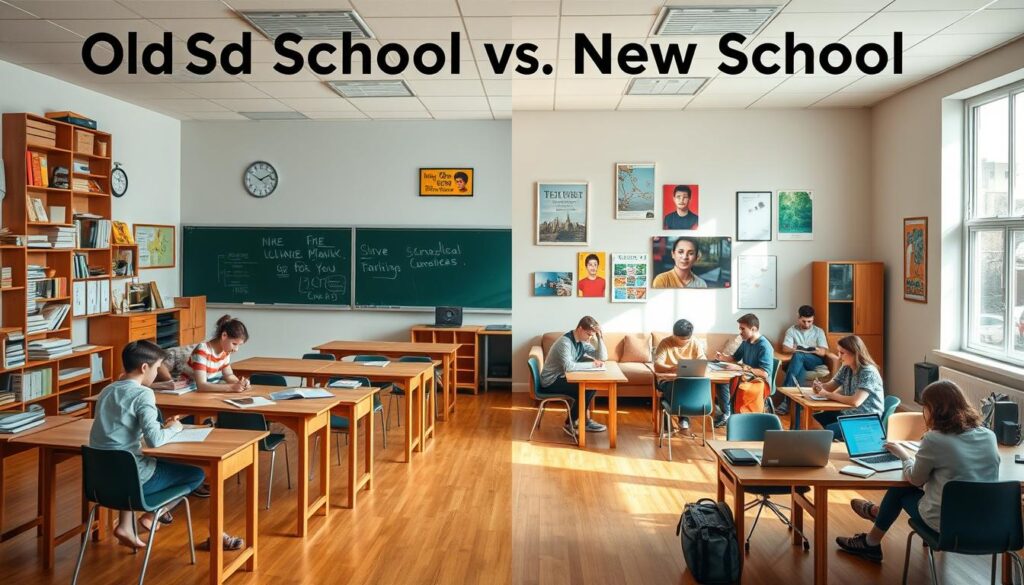
Having the right tools and resources is key for students to succeed. New school education offers digital platforms and tools that help a lot. But, old school studying methods like textbooks and notes are also great for learning.
New school education brings many digital resources like online books and videos. These make learning fun and interactive. They help students learn in new and exciting ways.
Traditional Study Materials
- Textbooks and workbooks
- Note-taking and organization systems
- Flashcards and concept maps
Digital Learning Platforms
- Online course platforms
- Learning management systems
- Mobile learning applications
By mixing old and new school methods, students can find what works best for them. This way, they can learn in a way that fits their style.
Measuring Your Learning Progress
To succeed as a student, it’s key to track your learning regularly. This means watching how you do, finding what needs work, and tweaking your study plan. This way, you can learn more efficiently and use your study time wisely.
Comparing study methods can also help boost your grades. Look at both old-school techniques like notes and flashcards and new tech like online courses and apps. See which ones fit your learning style best and plan your study time around them.
Important things to think about when checking your progress include:
- Setting clear goals and objectives
- Tracking your progress regularly
- Identifying areas of improvement
- Adjusting your study methods as needed
By following these steps and checking your progress often, you can stay focused, reach your academic goals, and achieve
| Study Method | Effectiveness | Time Efficiency |
|---|---|---|
| Traditional Methods | High | Low |
| Modern Approaches | High | High |
Adapting Study Methods to Different Subjects
Every subject needs its own special way of learning. New school education, with its tech and digital tools, is great for STEM subjects. These subjects need problem-solving and critical thinking. But, old school methods like note-taking and memorization work better for humanities and languages. These subjects focus on understanding and analyzing texts.
For STEM subjects, using technology and visual aids helps a lot. Online resources and educational apps make learning fun and interactive. But, humanities and languages need a more traditional approach. They focus on reading, writing, and thinking critically.
Here are some tips for adjusting your study methods for different subjects:
- Know what each subject needs and its special challenges
- Find the best ways to learn for each subject
- Use a mix of old and new methods for a balanced approach
By mixing the benefits of new and old school learning, students can find a method that works for them. This approach can make learning more fun and help you do better in school.
Success comes from finding a balance between old and new learning methods. It’s also important to be open to changing your study methods as needed.
| Subject | Effective Study Methods |
|---|---|
| STEM | Interactive tools, digital platforms, visual aids |
| Humanities | Note-taking, memorization, critical thinking |
| Language Learning | Immersion, practice, repetition |
Conclusion
Exploring old school and new school study methods shows us the best way to succeed is to find a balance. Traditional methods are solid and reliable, while digital tools offer personalization and speed. By mixing these, students can reach their highest levels and do better in school.
It doesn’t matter if you like books and flashcards or apps. The important thing is to try different ways until you find what works for you. Using both old and new methods can help you overcome any school challenge.
The debate between old and new school is not just yes or no. Success in school comes from being able to change, be creative, and mix old and new study ways. Start your learning journey with a curious mind, a desire to try new things, and a strong goal to achieve. The future of learning is yours to shape.
FAQ
What are the main differences between old school and new school study methods?
Old school study methods use traditional techniques like note-taking and memorization. They rely on textbooks. New school methods use digital tools, online courses, and mobile apps.
What are the benefits of old school study techniques?
Old school methods improve retention and focus. They also help with discipline. These methods fit well with traditional school structures.
What are the advantages of new school learning approaches?
New school methods offer personalization and real-time feedback. They use technology to make learning more engaging. This approach is great for students who prefer digital tools.
How can I create a hybrid study approach?
Mix traditional methods like note-taking with modern tools like online courses. Find a balance that suits your learning style. This way, you can use the best of both worlds.
What are some common mistakes to avoid when using old school and new school study methods?
Avoid distractions from technology and losing motivation. It’s also important to balance old and new methods. Adjust your study habits as needed.
How can I measure my learning progress when using different study methods?
Use a mix of traditional and modern tools to track your progress. This includes quizzes and online assessments. Regularly check your performance and adjust your study plan.
How do I adapt my study methods to different subjects?
Study methods vary by subject. For STEM, combine traditional note-taking with digital tools. Humanities might benefit from textbooks and discussions. For languages, try a mix of memorization, digital tools, and immersion.


Заказать Хавал – только у нас вы найдете разные комплектации. Быстрей всего сделать заказ на купить хавал джулиан можно только у нас!
[url=https://jolion-ufa1.ru]хавейл джолион[/url]
купить haval jolion – [url=http://www.jolion-ufa1.ru]https://jolion-ufa1.ru[/url]