Did you know that between 7,000 and 8,000 people in the United States are bitten by venomous snakes each year? Only about 5 of these incidents result in fatalities annually. This shows how rare severe outcomes are.
It’s easy to think all snakes are dangerous. But knowing the real risks and behaviors of sensational snakes changes our views. Some snakes, like the Inland Taipan, are very venomous but rarely meet humans. On the other hand, snakes like the Copperhead and Cottonmouth often scare people, even though they’re not as deadly.
To really understand snakes, we need to explore their complex world. Knowing the difference between venomous and non-venomous snakes is key. In this section, I’ll share important facts about these sensational snakes. We’ll clear up myths and misconceptions about poisonous reptiles.
Key Takeaways
- 7,000 to 8,000 venomous snake bites occur each year in the U.S.
- Only about 5 of those snake bites result in fatalities annually.
- The majority of serious snake interactions occur due to human behavior.
- Understanding differences in snake species can help mitigate fear.
- Rattlesnakes account for the majority of venomous snake bites reported in the U.S.
- The risk of dying from a snake bite is significantly lower than other common accidents.
The Fascinating World of Snakes
Snakes are a captivating part of wildlife. There are over 4,000 snake species today. They live in many places, from dry deserts to green rainforests. Each place has its own challenges and chances for snakes to survive and thrive.
Learning about snake behavior shows how they hunt and stay alive. Some snakes, like the sidewinder rattlesnake, can move fast, up to 29 km/h. Others use stealth and surprise to catch their prey. About 600 snake species have venom, but only 200 can really hurt humans.
Snakes have special features like forked tongues to sense their world. They can go months without eating but need water often. Their bodies are flexible because of many vertebrae. In different snake habitats, they show bright colors and patterns for hiding and startling others.
Exploring snakes, I’m amazed by their ability to handle extreme temperatures. They can survive from freezing cold to very hot. This shows how important they are in nature and how our relationship with them keeps changing.
Understanding Venom: What is Snake Venom?
Snake venom is a powerful substance made from modified saliva. It helps snakes catch and kill their prey. The venom is mostly proteins, with different types affecting living things in unique ways.
There are two main types of snake venom: neurotoxic and hemotoxic. Neurotoxic venom, like the Black Mamba’s, attacks the nervous system. It can kill in just 30 minutes, with a 100% fatality rate. Hemotoxic venom, found in Russell’s Viper, harms the blood system, causing bleeding and organ failure. It takes longer to kill than neurotoxic venom.
Cytotoxic venom can cause serious tissue damage, leading to long-term health issues. The Saw-scaled viper has this type of venom. Myotoxic venom, found in some sea snakes, can cause fast paralysis. This affects movement and breathing. About 20 species of venomous sea snakes have this effect.
Each person reacts differently to snake bites because of the variety in venom. Some snake venoms have been used in traditional medicine and in making medicines like ACE Inhibitors. Learning about snake venom helps us understand medical science and stay safe around snakes.
| Venom Type | Major Effects | Example Species |
|---|---|---|
| Neurotoxic | Affects the nervous system, can cause rapid death | Black Mamba |
| Hemotoxic | Targets circulatory system, causes bleeding | Russell’s Viper |
| Cytotoxic | Causes tissue damage | Saw-scaled Viper |
| Myotoxic | Leads to paralysis | Some Sea Snakes |
Sensational Snakes: Understanding Poisonous Reptiles
In my journey into the snake world, I’ve learned a lot about poisonous reptiles. The term “poisonous” is often used, but “venomous” is more accurate. Venom is what snakes inject into their prey. With about 600 venomous snake species globally, they help keep small mammal populations in check.
Many people fear snakes because of misconceptions. They think all snakes are dangerous, not knowing the difference between venomous and non-venomous ones. This fear can make us overlook the importance of these animals in our ecosystems.
Snakes have amazing abilities that help them survive. They can feel vibrations that we can’t, which makes them great hunters. Some snakes, like pythons, can even make their own heat, allowing them to live in different places.
The Gaboon viper has the longest fangs of any venomous snake, reaching up to 2 inches. This shows how different snakes can be, depending on where they live.
Most snakes are more scared of us than we are of them. Knowing this can help us live together better. Learning about poisonous snakes helps us respect wildlife and keep nature balanced.

| Aspect | Detail |
|---|---|
| Venomous Species | Around 600 species globally |
| Sensory Abilities | Can detect vibrations between 50 and 1,000 Hertz |
| Longest Fangs | Gaboon viper with 2-inch fangs |
| Ecological Role | Control small mammal populations |
| Human Encounters | Increased understanding can reduce fear and promote coexistence |
Types of Venomous Snakes
Learning about the different venomous snakes helps me appreciate and be careful around them. These snakes belong to three main families: elapids, vipers, and colubrids. Each family has special features and venom, making them interesting to study.
Elapids: The Fast and Poisonous
Elapids, like cobras and mambas, have strong neurotoxic venom and are very fast. They can strike quickly and stop their prey, helping them survive and hunt. With many species, elapids show a variety of colors and behaviors, earning both fear and respect.
Vipers: The Ambush Predators
Vipers, including rattlesnakes and pit vipers, use ambush tactics. They have hemotoxic venom to take down larger prey, helping them live in different places. Their skin blends into their surroundings, making them hard to spot as they wait for prey.
Colubrids: The Lesser-Known Venomous Family
Colubrids, like the boomslang, are often not well-known but are venomous. Even though their venom is not always dangerous, local stories sometimes make them seem more threatening. The variety in venomous snakes is important for ecosystems and shows how these reptiles have adapted to survive.
| Type | Example Species | Venom Type | Hunting Strategy |
|---|---|---|---|
| Elapids | Cobra, Mamba | Neurotoxic | Fast strikes |
| Vipers | Rattlesnake, Pit Viper | Hemotoxic | Ambush |
| Colubrids | Boomslang | Varied (mostly mild) | Varied |
The Anatomy of a Venomous Snake
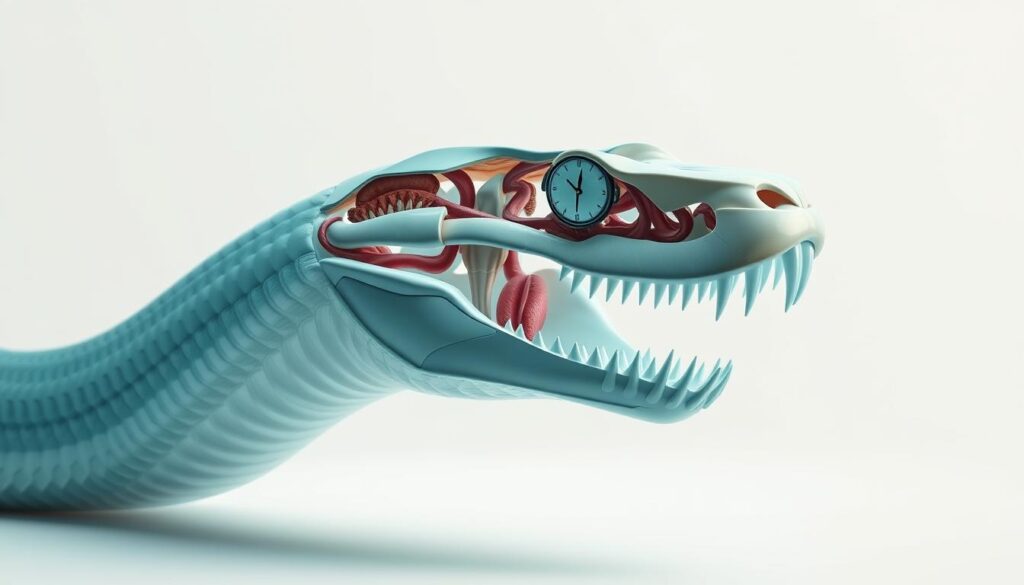
Learning about venomous snakes’ anatomy helps us understand how they catch prey and defend themselves. These snakes have special glands that make and store venom. This venom is delivered through hollow fangs, which are made for injecting it into their victims. The design of these features is key to their hunting success.
Specialized Glands and Fangs
Venomous snakes have parts that make them great hunters. Their glands in the head make different types of venom. This venom is a mix of enzymes and toxins, tailored for each prey or threat.
Their fangs are hollow, making them perfect for delivering venom. When they bite, the venom goes straight into the prey. This helps the snake immobilize its prey quickly.
How Venom Delivery Works
The way venom is delivered is quite interesting. When a snake bites, muscles push the venom into the fangs. This lets the snake control how much and how potent the venom is.
Each species has its own venom and way of delivering it. This is because of their evolution and where they live. By studying this, we can see how venomous snakes have adapted over time to be good hunters.
| Feature | Description |
|---|---|
| Venom Glands | Specialized organs that produce and store venom, located in the head. |
| Snake Fangs | Hollow, sharp structures designed for injecting venom into prey. |
| Venom Delivery Mechanism | Muscle contractions facilitate the movement of venom from glands to fangs during a bite. |
| Variability Across Species | Different species have unique venom compositions and injection techniques. |
Most Venomous Snakes in the World
Two snakes stand out as the most venomous: the Inland Taipan and the Black Mamba. They have deadly venom and unique behaviors. Their habitats also add to their danger.
Inland Taipan: The Deadly Champion
The Inland Taipan is the most venomous snake in the world. Its venom can kill about 100 humans with one bite. This snake is usually shy, which means it rarely meets humans.
Even though its venom is very toxic, the Inland Taipan is not often seen by people. This makes it less of a threat to humans.
Black Mamba: Speed and Aggression
The Black Mamba is known for its aggression and speed. It is one of the most dangerous snakes. A single bite can kill 10 to 25 adults.
Without quick medical help, almost everyone bitten by a Black Mamba will die. Its venom can cause symptoms in 15 minutes to hours. It’s very important for anyone bitten to get help right away.
| Snake Species | Characteristics | Venom Potency | Fatality Rate Without Antivenin |
|---|---|---|---|
| Inland Taipan | Reclusive, shy | Extremely high | 100% |
| Black Mamba | Aggressive, fast | Highly neurotoxic | Close to 100% |
Knowing about these snakes helps us understand their dangers. It also shows why we should respect their habitats. We need to protect these amazing reptiles.
Snake Bites: What You Need to Know
Every year, about 2.5 million venomous snake bites happen worldwide. These bites lead to around 150,000 deaths. Places like Southeast Asia, India, Brazil, and parts of Africa see the most deaths from snake bites.
Knowing the signs of snake bites is key. Rattlesnake bites can cause bleeding, breathing trouble, and tissue damage right away. Coral snake bites might not show symptoms for hours but can be deadly if not treated.
Signs of snake venom can include blurred vision, too much sweating, and severe pain. Spotting these signs early is important for quick action.
First aid for snake bites is all about getting medical help fast. Use a pressure bandage on the bite and keep the person calm until help comes. Knowing what to do can save lives.
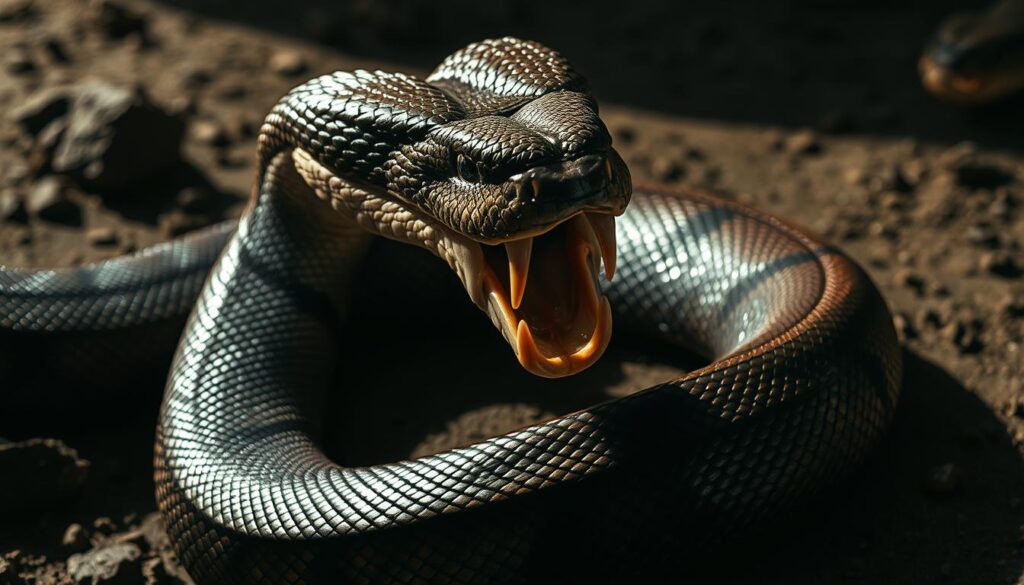
Children are more at risk because of their smaller size. It’s important to teach them about snake safety. To avoid snake bites, stay away from places where snakes hide and wear protective clothes when hiking in snake areas. This knowledge helps keep everyone safe when exploring nature.
Recognition and Identification of Venomous Snakes
Knowing how to spot venomous snakes is key to staying safe. It helps us tell apart common snakes from the dangerous ones. We need to know about venomous snake features like body shape, head color, and tail patterns.
Key Features for Snake Identification
There are a few things that help us tell venomous snakes from non-venomous ones:
- Head Shape: Venomous snakes have wider heads than their bodies. Non-venomous snakes have more uniform heads.
- Coloration and Markings: Venomous snakes often have bright colors or patterns. For example, coral snakes have vibrant bands.
- Pupil Shape: Venomous snakes have elliptical pupils. Non-venomous snakes have round pupils.
- Tail Characteristics: Venomous snakes have short, thick tails compared to their bodies.
Common Misidentifications
It’s easy to get snakes mixed up, leading to unnecessary fear. For example:
- The gopher snake is often mistaken for a rattlesnake because of their similar looks.
- Coral snakes are sometimes confused with non-venomous mimic snakes because of their color patterns.
- The rat snake is often mistaken for a venomous snake, causing panic.
Learning about snake identification can make our communities safer. It helps us understand these reptiles better.
Snake Encounters and Safety Tips
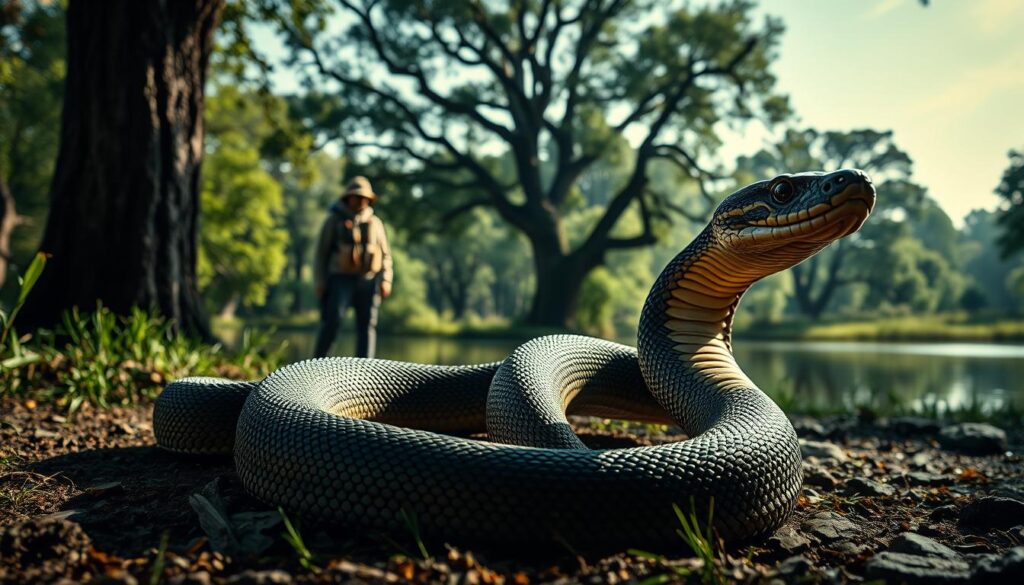
Exploring the outdoors with snakes can be thrilling but risky. Knowing how to stay safe around snakes is key. Being aware and prepared helps prevent snake bites. By following simple safety tips, I can enjoy the outdoors without fear of snakes.
Avoiding Snake Bites in the Wild
Most snakes stay away from humans, but accidents can happen. Wearing high-top shoes or sturdy boots protects my ankles. Staying away from tall grass and loose rocks helps too.
Being alert and aware, mainly in spring, summer, and fall, is important. This way, I can spot snakes before they spot me.
If bitten, staying calm is vital. Watching for symptoms like nausea and swelling is important. Tracking swelling with a permanent marker every 15 minutes helps doctors later.
Seeking medical help fast is critical. Waiting too long can lead to serious problems, even death.
What to Do if You Are Bitten
If bitten, act quickly. Avoid moving too much and find shelter if you can. Knowing how long it takes for help to arrive is key.
Documenting symptoms and the timeline helps doctors. Knowing that some snake bites don’t inject venom can offer hope. But, treating every bite as serious is best for safety.
Ecological Role of Venomous Snakes
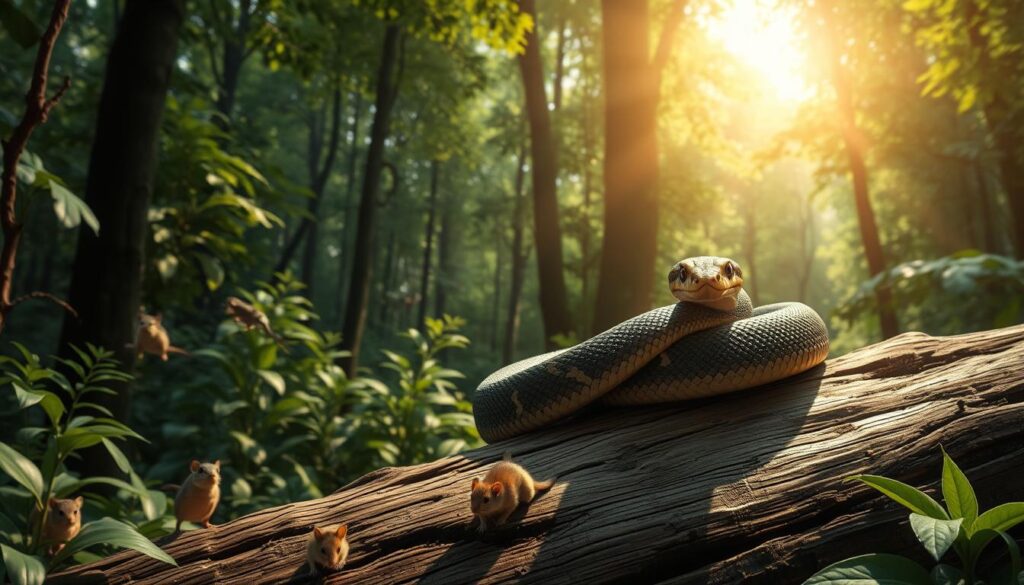
Venomous snakes are key to keeping ecosystems balanced. They control rodent and small animal populations. Without them, some species might overpopulate, causing big problems.
Snakes also play a big role in the food chain. They are prey for larger animals. This shows how important they are in the ecosystem.
Venomous snakes have special adaptations to survive. For example, male platypuses have venomous spurs from sweat glands. Their venom helps immobilize prey and changes prey behavior.
This can lead to more diverse species living together. It’s a fascinating way snakes impact their habitats.
Snake venom could lead to new medicines. It might help treat high blood pressure and even cancer. Yet, only a tiny fraction of venom is studied, leaving room for more discoveries.
In short, venomous snakes are vital as predators and prey. Their role in ecosystems shows we need to keep studying and protecting them. Learning about these creatures helps us understand how to keep our planet healthy.
Common Myths About Snakes
Many people have wrong ideas about snakes, thanks to old myths. One big myth is that all snakes are deadly. But, only about 20 venomous snake species exist in North America, like rattlesnakes and copperheads.
Another myth says a snake’s head shape tells if it’s venomous. But, only some snakes, like vipers, have triangular heads. Also, people think baby rattlesnakes are less dangerous. But, adult snakes have more venom, making their bites worse.
About 1 in 3 Americans are afraid of snakes, called ophidiophobia. This fear often comes from scary stories. Sadly, many snakebite cases happen when people try to handle or kill snakes.
Many also believe snakes often attack humans. But, this is not true. There are no records of anacondas eating people. They live in swamps, so they rarely meet humans.
Learning more about snakes helps change how people see them. By clearing up these myths, we can better understand and protect snakes. This is important for keeping people safe and helping snakes thrive.
How to Handle Snakes Safely
Handling snakes safely is all about respect, awareness, and skill. Always put safety first, whether you’re in school or just meeting a snake. Knowing the best practices and using the right snake handling tools makes interactions safer.
Essential Tools for Snake Handling
Many tools are key to safe snake handling. Here’s a list of must-haves that help keep risks low:
| Tool | Purpose |
|---|---|
| Snake Hook | Used for lifting snakes safely without direct contact. |
| Snake Bag | Allows for the safe transport of snakes while minimizing stress. |
| Safety Gloves | Protects the handler from bites and minimizes stress for the snake. |
| Snake Tongs | Enables secure handling without getting too close to the snake. |
Best Practices for Safe Interactions
When dealing with snakes, follow certain best practices for safety. Here are some key guidelines:
- Remain calm and avoid sudden movements.
- Observe the snake’s behavior to understand its body language.
- Always use appropriate snake handling tools.
- Encourage educational programs to build awareness and skills.
- Follow guidelines established by Best Management Practices for handling snakes.
Getting proper training and knowledge is vital for snake handling. Workshops can teach you how to interact safely with these amazing reptiles. By following best practices and using the right tools, we create a safer space for everyone.
Cultural Significance of Snakes
Snakes have always been important in cultures around the world. They are seen as both good and evil, depending on the story. In myths, snakes often mean wisdom and change, acting as guardians or teachers. But, they can also be seen as threats, causing fear.
In many cultures, snakes help explain the world or human feelings. The Egyptian goddess Wadjet shows snakes as protectors, guarding pharaohs. On the other hand, some Native American tribes see rattlesnakes as warnings, showing respect for nature. This shows snakes can have both good and bad meanings.
Looking into these beliefs, I see how snakes are linked to history. In ancient Greece, Asclepius’s story features a snake staff, symbolizing healing. This shows a deep understanding of life and death, a common theme in many cultures.
These beliefs weave a rich picture of snakes in human history. By studying snake myths, we learn about our complex relationship with them. Snakes are seen as symbols of life, death, and everything in between. This shows how different cultures view and interact with these fascinating creatures.
| Culture | Symbolism | Mythological Example |
|---|---|---|
| Egyptian | Protection, Wisdom | Wadjet |
| Native American | Caution, Respect for Nature | Rattlesnake |
| Greek | Healing, Medicine | Asclepius’ Staff |
| Hindu | Cycle of Life, Rebirth | Shiva and Naga |
The Future of Venomous Snakes Conservation
Protecting venomous snakes is key, with habitat loss and human encroachment being big issues. Efforts to save these snakes are vital for their survival. By doing so, we also protect biodiversity and the ecosystems that depend on them.
Addressing this problem needs a variety of solutions. Public education can help change how people view snakes. It’s important to understand their role in nature to gain respect for them.
Looking ahead, we must focus on sustainable practices. Studying snake behavior and habitats can guide conservation. Preserving natural areas helps counter the effects of urban growth.
Working together is essential. Scientists, governments, and communities must join forces. The Global Snake Bite Initiative is a global effort to tackle snakebite issues. It aims to reduce the health risks from snakebites, which kill over 100,000 people each year.
Investing in snake conservation means learning about their role in ecosystems. Good wildlife management plans can protect snakes and allow humans to live nearby. This commitment can help find a balance between nature and human activities.
Conclusion
Reflecting on what I’ve learned about snakes, it’s clear that knowing about them is key. It helps us understand and respect these amazing animals. This knowledge lets us tell venomous snakes from non-venomous ones, reducing fear and opening doors to learning and protecting them.
My journey to learn about venomous snakes has shown me their importance in nature. They keep ecosystems balanced, and it’s our duty to safeguard their homes and support their survival. By embracing the world of snakes, I hope to inspire others to explore and appreciate these incredible reptiles.
Learning about snakes does more than just dispel myths. It highlights the need to protect their species for the future. The more I discover about snakes, the more I want to help protect them and live in harmony with them.
FAQ
What is the difference between venomous and poisonous snakes?
Venomous snakes inject venom through fangs. Poisonous snakes release toxins when eaten. The right term for venom delivery is “venomous.”
How can I identify a venomous snake in the wild?
Look for body shape, head color, unique markings, and tail features. Knowing local species helps with identification.
What should I do if I encounter a snake?
Stay calm and slowly back away. Avoid sudden moves. Wear protective clothes to prevent encounters.
What are the immediate steps to take after a snake bite?
Get medical help right away. Stay calm, keep the limb steady, and don’t use a tourniquet or cut the bite.
Are all venomous snakes aggressive towards humans?
No, most venomous snakes are shy and avoid people. They only attack when threatened or cornered.
What types of venom do poisonous snakes have?
Venomous snakes have different venoms. Some affect the nervous system, while others harm the circulatory system and cause tissue damage.
How important are venomous snakes to the ecosystem?
Venomous snakes help control small mammal populations. They also have medicinal uses, aiding in ecological balance.
What are some common myths about snakes?
Myths include thinking all snakes are poisonous and aggressive. Education helps clear these misconceptions.
Is snake handling safe?
Snake handling is safe with proper tools, techniques, and training. Use snake hooks, bags, and gloves for safe handling.
How is the conservation of venomous snakes being addressed?
Efforts include preserving habitats, educating about their role, and promoting coexistence. These steps help reduce fear and support conservation.
Source Links
- Hiking with Venomous Snakes | Outdoor Herbivore Blog
- Facts and advice on adder bites
- snake
- Awesome 8: Super snakes
- Snake facts | Amphibians & Reptiles | BBC Earth
- Snake venom: Know its types, usage, evolution and more | – Times of India
- Venom
- Do Snakes Have Ears? And Other Sensational Serpent Questions
- Venomous Snakes: A Neglected Hazard for Outdoor Workers | Blogs
- VenomousReptiles.org Survey Home
- Venomous Snakes Poisonous Snakes Reptile Gardens Reptile Gardens
- Snake – Scales, Venom, Slithering | Britannica
- Snakes
- Crotalidae Envenomation – StatPearls – NCBI Bookshelf
- Top 10 Most Venomous Snakes – Listverse
- Most Venomous Snakes Worldrsquos Deadliest Snake Reptile Gardens Reptile Gardens
- Snake bites Information | Mount Sinai
- The amazing science behind fatal snake bites
- What you Need To Know About Tiger Snake Bites
- Management of Venomous Snake Bites in North America
- Compendium of medically important snakes, venom activity and clinical presentations in Ghana
- Trail Safety for Snake Encounters and Snake Bites
- Snake-Wise Safety Tips
- Mark O’Shea Answers Questions
- Why do we study animal toxins?
- Compendium of medically important snakes, venom activity and clinical presentations in Ghana
- S-s-sensational Tales: 5 Snake Myths Busted by an Expert
- Monster Monday: Anaconda | World Book
- Best Management Practices – Public Safety
- Interactive Snake Shows & Custom Reptile Programs
- The Sign of Serpent Handling and the Development of Southern Pentecostalism
- ‘Offensive’ snakes: cultural beliefs and practices related to snakebites in a Brazilian rural settlement
- ‘Down pythons’ throats we thrust live goats’: snakes, zoos and animal welfare in nineteenth-century Britain | The British Journal for the History of Science | Cambridge Core
- Non-Venomous Snakes Snake Facts Reptile Gardens Reptile Gardens
- Snakebite envenoming – Nature Reviews Disease Primers
- Spotlight on: Eastern Massasauga Rattlesnake | Lincoln Park Zoo
- Exotic Animal Invaders: Tracking the invasive Burmese python through the swamps of Florida
- Sensational site: the sodium pump ouabain-binding site and its ligands