


I’ve seen a big change in how young people care for their skin. Social media is a big part of this change. It’s where many young people find out about new skincare trends and products.
Now, about 68% of Gen Z and Gen Alpha have a skincare routine. This is thanks to social media’s influence. It’s become a key place for advice and product suggestions.
Social media has a big impact on young people’s beauty habits. Over 50% of kids aged 6 to 16 want to buy products they see online. This shows how much they look up to influencers and celebrities.
Brands like Drunk Elephant have seen a huge increase in followers on social media. This shows the power of online marketing. Young people want to follow in the footsteps of their favorite stars.
The craze for face lotion among young people is complex. It’s influenced by social media and online marketing. Platforms like TikTok and YouTube expose them to many skincare products and routines.
This can be good or bad for their skin. It’s important to understand the impact of social media on skincare trends.
Key Takeaways
- Social media influence plays a significant role in shaping skincare trends among youth
- Approximately 68% of Gen Z and Gen Alpha combined have a skincare routine
- Over 50% of children aged 6 to 16 express a desire to purchase products used by online content creators or influencers
- Social media platforms like TikTok and YouTube have a profound impact on youth beauty obsession
- Dermatologists warn that many skincare products aimed at youths may contain strong ingredients that may not be suitable for young skin
- Parents should be cautious when choosing skincare products for their children, opting for gentle and suitable products
Understanding the Digital Beauty Revolution
The beauty industry is changing fast, thanks to social media and digital ads. Online beauty groups are key in shaping what people want to buy. Beauty brands are now using social media to reach out to younger people.
Recent data shows more searches for skin care, mainly by Generation Alpha. TikTok hashtags like #teenskin and #skincarefortweens are getting more popular. This shows young people are more interested in beauty brands like Sephora and Ulta.
- A 16% increase in prestige beauty spending among households with children
- A growing demand for products with niacinamide, retinol, and salicylic acid
- An emphasis on natural ingredients and sustainable packaging
Social media and digital ads are key in the beauty industry’s growth. Beauty brands that connect with online beauty groups and share clear info can win trust and loyalty.
How Social Media is Driving Face Lotion Craze Among Youth
Social media plays a big role in shaping youth skincare trends. Online beauty gurus and influencers push various products, like face lotions. This constant flow of info makes some products seem urgent and exclusive, causing a fear of missing out (FOMO) among young people.
The social media influence on millennial beauty habits is clear. Many young folks look to online beauty experts for advice. But, it’s important for them to be careful about what they read online. They should also listen to trusted experts, like dermatologists.
- A big jump in tweens and young teens buying skin care products has been seen.
- Dermatologists say there’s an increase in skin problems among minors because of social media’s push for complex skincare routines.
- The skincare industry made over $9 billion in sales last year, thanks a lot to social media.
The power of online beauty gurus on youth skincare trends is huge. As social media keeps shaping millennial beauty habits, it’s key for young people to know the risks and benefits of different products. They should make smart choices about their skincare routines.
The Psychology Behind Youth Skincare Obsession
Exploring the world of skincare reveals the psychological reasons behind young people’s obsession. Beauty trends are changing, with social media playing a big role. Influencers and celebrities promote products and routines, making a big impact.
Young people crave digital validation and want to feel good about themselves. They see unrealistic beauty standards everywhere, making them feel not good enough. The self-care movement has also fueled this obsession. But, it’s important to find a balance between caring for oneself and meeting societal beauty standards.
Recent data shows a 20% increase in skin care spending among tweens and teens in 2023. Social media ads, featuring influencers, are a big reason for this. Products with strong ingredients like retinol and glycolic acid are popular but can harm young skin.
We need to talk openly about the emotional side of skincare routines with teens. It’s key to understand why they buy certain products. By teaching them about the risks of some products, we can help them make better choices.
| Skincare Product | Ingredients | Potential Risks |
|---|---|---|
| Retinol-based products | Retinol, glycolic acid | Premature skin aging, irritation |
| Salylic acid-based products | Salylic acid, beta-hydroxy acid | Dryness, irritation, allergic reactions |
Generation Z’s Unique Approach to Skincare
Gen Z’s skincare habits are shaped by online skincare trends and social media influence. They look for natural and sustainable products that fit their diverse skin types and tones. Online communities and forums help them share skincare tips, fostering a sense of community and solidarity.
Gen Z values personalized skincare consultations, with about 60% seeking advice tailored to their skin concerns. Over 55% prefer minimalist skincare routines, choosing products that do more with fewer steps. Social media plays a big role, with around 52% turning to it for beauty and skincare trends.
Some key statistics about Gen Z’s skincare habits include:
- More than 70% of Gen Z consumers want brands that focus on sustainability and ethical practices.
- About 68% of Gen Z is eco-conscious and looks for cruelty-free products.
- 63% of Gen Z is interested in skincare products that improve long-term skin health and focus on prevention.
The Role of Beauty Influencers in Shaping Trends
Social media influencers are key in the beauty world. They shape how young people think about beauty. Their online presence and content strategies greatly influence what people buy.
Many dermatologists are now on social media. They share science-backed beauty tips and product recommendations. This has made consumers more informed, with social media influencers being a top source of info.
These influencers play a big role in setting beauty trends. Their advice and reviews can sway millions of people’s buying choices.
Some key statistics show the big impact of social media influencers on beauty:
- 49% of drug store skin sales were driven by consumers under age 14, according to a NielsonIQ report.
- In the first half of 2024, a third of “prestige” beauty sales at stores like Sephora were attributed to households with tweens and teens, as reported by market research firm Circana.
- The hashtag #GRWM on TikTok has over 150 billion views, indicating high engagement with beauty influencers’ content.
The beauty industry keeps changing, and influencers play a big part in that. By understanding their impact and strategies, we can keep up with the beauty world’s shifts.
| Influencer Type | Followers | Engagement |
|---|---|---|
| Micro-Influencers | 10,000 – 100,000 | High |
| Celebrity Endorsements | 1 million – 10 million | Medium |
| Nano-Influencers | 1,000 – 10,000 | Very High |
Marketing Tactics That Drive the Face Lotion Trend
The beauty industry is always changing, and digital marketing strategies are key in pushing the face lotion trend. Companies use social media marketing to connect with young people on Instagram and TikTok.
There’s a big jump in spending on skin care, with a 27% increase in 2023 for US households with kids aged 6 to 12. This rise is thanks to online advertising that speaks to young people.
Companies like Bubble Skincare and Sol de Janeiro are seeing big sales boosts. Bubble Skincare is now in 12,000 stores in the US and UK. Their products are popular with young kids, thanks to social media content and influencer marketing.
- US households with 6- to 12-year-olds spent 27% more on skin care in 2023 compared to the previous year.
- Households with 13- to 17-year-olds experienced a similar increase in spending, surpassing the overall 13% growth rate across the US.
- Piper Sandler’s teen spending survey indicates skin-care spending climbed 19% year-over-year, averaging $122 per teenager.
As the beauty industry keeps growing, companies need to update their digital marketing strategies. They must reach and engage their audience while following strict social media rules.
The Economic Impact on the Beauty Industry
The beauty industry has seen big growth in recent years. This is thanks to new beauty industry trends and more people wanting skincare products. In 2023, U.S. households with kids aged 6 to 12 spent 27% more on skin care than the year before. They spent a total of $4.7 billion.
This growth is due to smart digital marketing strategies. These strategies help companies reach and connect with young people online. New business models have popped up, like subscription services and online marketplaces. These models help companies build strong relationships with their customers.
Companies like Sol de Janeiro and e.l.f. Beauty have really benefited from this trend. They’ve seen big increases in sales and shares. Here’s a table showing how sales of skincare products among young people have grown:
| Company | Sales Growth |
|---|---|
| Sol de Janeiro | 40% |
| e.l.f. Beauty | 90% |
Scientific Facts vs. Social Media Claims
When I explore skincare trends, I see a big gap between what science says and what social media claims. Beauty trends often follow what influencers say, but they don’t always back it up with facts. Studies show many skincare products promise a lot, but they might not be right for young skin.
Skincare trends change fast, with new products and routines popping up daily. But, it’s key to know the difference between real and fake. Dermatologists and skincare pros offer great advice on what works for different skin types and issues. For example, they suggest teens and tweens use simple products like a gentle cleanser, a moisturizer without scent, and sunscreen.
Some interesting facts include:
- Many young people follow complex skincare routines because of TikTok and Instagram.
- Dermatologists see more cases of acne, rosacea, and eczema in young patients.
- Young people often feel anxious about their looks and beauty, thanks to social media.
It’s important to watch out for false info on social media and talk to dermatologists for real advice. This way, we can choose the right skincare products and avoid things we don’t need. Dr. Yvonne Chiu says young kids don’t need complicated skincare because they don’t have wrinkles or skin color issues. 
In short, we should be careful with skincare trends, looking at both science and social media. This helps us make smart choices for our skin. Beauty trends may change, but science always guides us to healthy, beautiful skin.
The Dark Side of the Skincare Obsession
The skincare obsession has a dark side, with over-consumption and waste harming the environment and our wallets. Beauty trends push young people to chase unattainable beauty goals. This can hurt their mental health, causing low self-esteem and anxiety, and also hit their financial health hard.
The beauty industry is huge, worth $164 billion. The hashtag “Sephora Kids” has been used over 11,000 times on TikTok. This shows how skincare trends are affecting kids, making them start using products early.
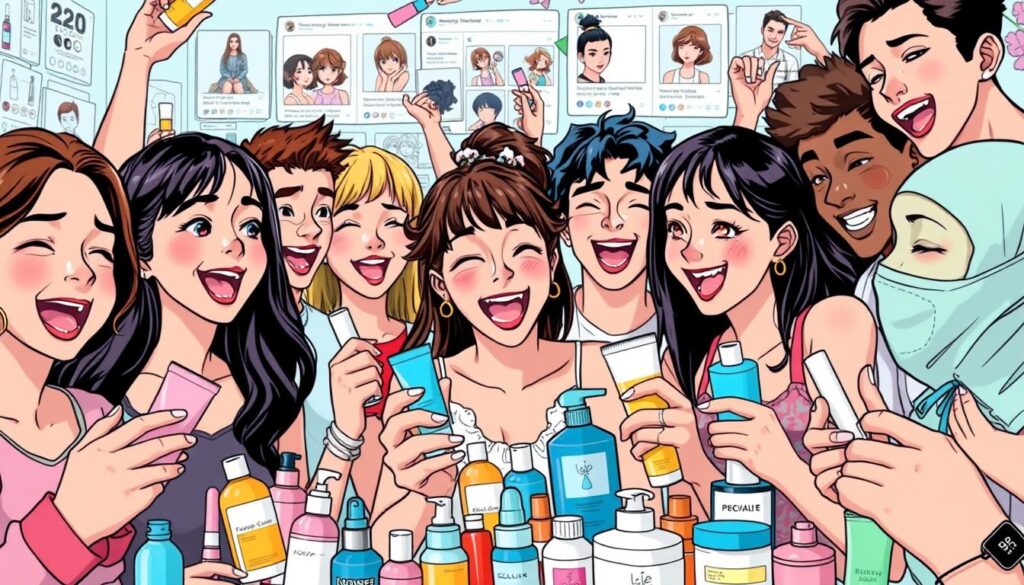
The financial impact of this obsession is big, with young people spending a lot on skincare. This can cause financial stress and debt, affecting their future. The mental health implications are also serious, with the pressure to look perfect leading to anxiety and low self-esteem.
We need to focus on a healthy skincare approach that values mental health and well-being. This way, we can lessen the negative effects of the skincare obsession. We can work towards a more positive and inclusive beauty industry.
Future Predictions for Social Media Beauty Trends
Social media trends will keep shaping the beauty industry. Gen Z and Gen Alpha will lead the market. Companies must adjust their digital marketing to meet these new consumers’ needs.
Sustainability and diversity will be key. 70% of consumers want eco-friendly brands.
At-home beauty tech and advanced skincare will grow. Sales and service requests will increase by 25% and 30%, respectively.
Here are some future trends:
- More focus on wellness integration in beauty services. 55% of clients want holistic experiences.
- More demand for diverse beauty products. A 40% rise in products for various skin tones and types.
- Greater importance on transparency and ethical practices. 85% of consumers want clear product information.
As the beauty industry evolves, companies must stay ahead. They should use social media trends and adapt to consumer needs. This way, they can stay competitive and succeed in the changing market.
Conclusion
The face lotion craze among youth shows how social media and digital marketing have changed the beauty world. This craze, fueled by visual stories and the fear of missing out, has both good and bad sides.
On one hand, it’s made young people focus more on self-care and skin health. This is a positive step towards better well-being. But, the spread of false information and the push for unrealistic beauty has caused problems too.
It’s important to see this trend with a balanced view. We should focus on education, sustainability, and being inclusive. By teaching young people to make smart choices, we can help them have a healthier view of beauty.
As the face lotion craze grows, it’s key for the beauty industry, social media, and health experts to work together. They should offer reliable information, share real content, and support the mental and physical health of young people. This way, we can help the youth of today and tomorrow.
FAQ
What is driving the face lotion craze among youth?
The face lotion craze among youth is fueled by social media. Platforms like TikTok and Instagram show off skincare favorites and routines. Influencers and celebrities play a big role in this trend.
How has social media transformed the beauty industry?
Social media has changed the beauty world a lot. It’s filled with skincare content, with TikTok leading the way. Its short videos and challenges set new trends.
What is the role of social media influencers in shaping skincare trends?
Micro-influencers are key in setting skincare trends. They share products and routines, influencing millions of young people’s choices.
What are the psychological factors behind the youth skincare obsession?
Youth’s skincare obsession comes from many factors. FOMO, the need to meet beauty standards, and social media’s effect on self-image are big reasons.
How does Generation Z approach skincare differently?
Gen Z’s skincare is all about social media and trends. They focus on natural, sustainable products and make skincare part of their self-care.
What are the marketing tactics used to drive the face lotion trend?
Marketing tactics include targeted ads, influencer partnerships, and sponsored content. These tactics play on young people’s insecurities and can spread false info.
What is the economic impact of the face lotion trend on the beauty industry?
The face lotion trend boosts the beauty industry’s sales and growth. Digital marketing and new business models like subscriptions drive this growth.
How do the scientific facts about skincare differ from social media claims?
Skincare science often clashes with social media claims. It’s key to trust dermatologists and experts over social media for skincare advice.
What are the potentially downsides of the skincare obsession?
The skincare obsession has downsides. It can lead to waste, mental health issues, and financial strain. Young people might spend too much on products and procedures.
How will social media beauty trends evolve in the future?
Future beauty trends will be shaped by social media’s ongoing influence. New tech, sustainability, diversity, and inclusivity will also play big roles.
Source Links
- The tween skincare market is booming, thanks to social media
- TikTok skin care craze has Long Island tweens flocking to Sephora, Ulta. What is safe?
- Decoding Generation Alpha & Beauty
- The Influence of Social Media on Skincare: A Deep Dive – Reviva Labs
- Cosmetics Craze: How Online Shoppers are Splurging on Beauty Essentials – Indian Retailer
- Social media is fueling a tween skin care craze. Some dermatologists are wary
- Tween skincare craze: How marketers reach preteens on social media
- Why are tweens and teens obsessed with skin care? Doctors warn the trend could be doing more harm than good – WTOP News
- TikTok: Teens educating themselves on skincare trends
- Gen Alpha kids are obsessed with skin care thanks to ‘skinfluencers’ and TikTok. Some adults are concerned
- What is Gen Z Looking for in Skincare? Aligning Your Products and Trea
- Skincare For Tweens and Teens: Everything You Need To Know From A Dermatologist
- Health professionals warn the expensive skincare products your tween wants for Christmas could be harming them
- Young girls are using anti-aging products they see on social media. The harm is more than skin deep
- Tweens are obsessed with skin care – but is it safe for kids?
- Tweens obsessed with skin care drive brands to say: Don’t buy our stuff
- Barbie who? Gen Alpha kids ‘obsessed’ with skin care could fuel holiday spending
- Beauty brands send warning to skincare-obsessed tweens
- The skin care craze has hit tweens. But what is actually worth it?
- ‘Sephora kids’ skin-care trend draws warnings from dermatologists
- Teen TikTok skincare craze: What every parent needs to know
- Social media impact on youth skin are- SkinCare Physicians
- How TikTok’s skincare craze impacts mental health and beauty standards
- Gen Alpha kids are obsessed with skin care thanks to ‘skinfluencers’ and TikTok. Some adults are concerned
- I Was Too Obsessed With Skin Care
- Growing skincare use by children is dangerous, say dermatologists
- What is the Future of Beauty in 2025? Trends Every Professional Should
- Beauty trends for younger consumers
- Parents, your preteen girl’s skincare fetish is harming her — body, mind and soul
- Social media beauty trends leading to skin barrier breakdown at 18
- Skincare For Tweens and Teens: Everything You Need To Know From A Dermatologist


