

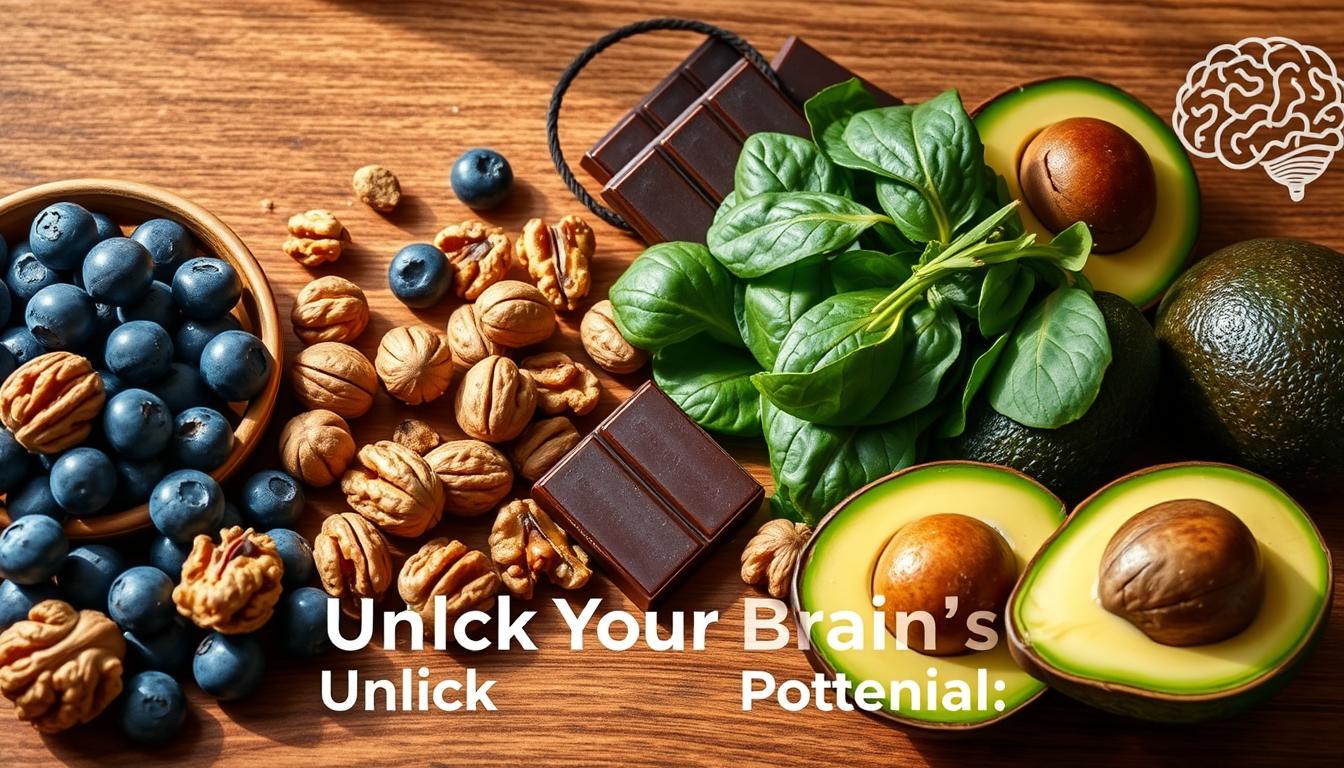
Can certain foods really boost our brain power and help us do better in school? Research says yes. A diet full of brain-boosting foods can make our brains work better and help us succeed in school1. Foods like salmon, packed with omega-3s, can improve memory and mood, and might even fight off Alzheimer’s1.
I’m excited to learn how food affects our brains. Foods like wholegrains, which are easy to digest, keep us sharp all day2.
Blueberries, full of flavonoids, can slow down brain aging and boost memory by making brain cells talk better1. Eating too little fiber, fruits, and veggies can raise the risk of diseases like Alzheimer’s3. I’ll dive into the science behind how food affects memory and brain health. We’ll look at key nutrients like omega-3s, antioxidants, and vitamin E.
Key Takeaways
- Eating brain-boosting foods can enhance cognitive function and support academic success
- Foods like salmon, blueberries, and wholegrains can aid in memory and mood improvement
- A healthy diet rich in brain-boosting foods can help prevent Alzheimer’s disease and other neurodegenerative diseases
- Nutrients like omega-3 fatty acids, antioxidants, and vitamin E are essential for brain health
- A diet low in fiber, fruits, and vegetables can increase the risk of cognitive decline
- Regular exercise and quality sleep are also important for brain health and cognitive function2
Understanding the Brain-Food Connection
Nutrient-rich foods are key for brain health4. Foods high in omega-3 fatty acids boost brain function and flexibility4. On the other hand, high saturated fats can slow down brain work4.
Eating foods like berries and nuts can improve memory and thinking5. Studies show kids who eat these foods do better in school5.
It’s important to eat a variety of brain-boosting foods5. These foods give your brain the nutrients it needs, which is vital during school5. Eating these foods regularly can make you feel sharper and more focused6.
Some of the best foods for your brain include leafy greens, nuts, and eggs6. These foods are full of omega-3s, vitamin K, and choline6.
Adding these foods to your diet can help your brain stay healthy4. They’re great for studying because they keep you focused and alert5.
Brain-Boosting Foods to Enhance Your Memory While Studying
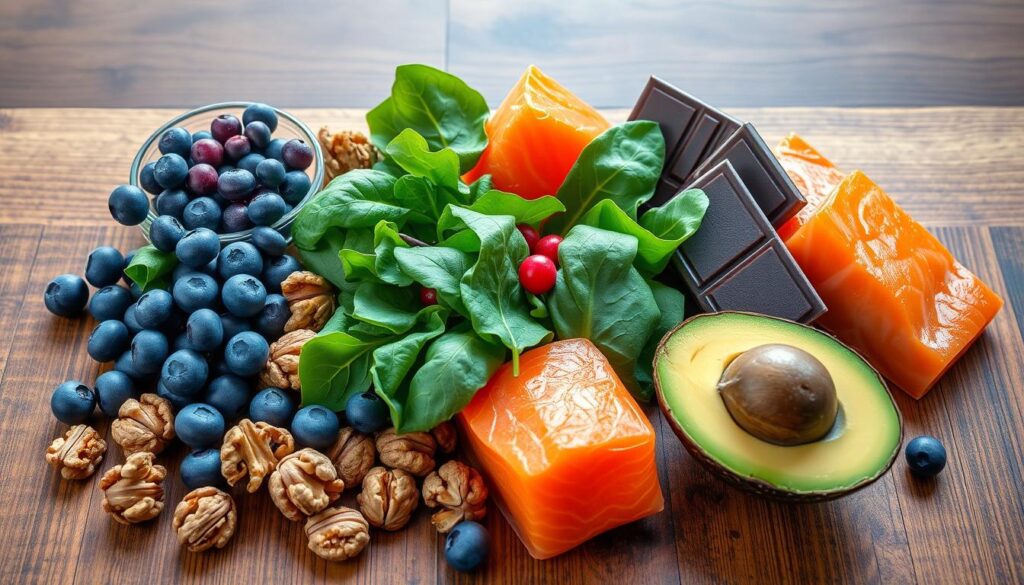
As a student, it’s key to eat foods that boost your brain. Brain-boosting foods like omega-3 fatty acids, antioxidants, and nutrients improve focus and concentration7. Good foods include fatty fish, nuts, seeds, berries, and citrus fruits8.
Eating a variety of foods for better memory supports brain health. Omega-3 fatty acids, antioxidants, and B vitamins are important9. Here are some foods to add to your diet:
- Fatty fish like salmon and sardines
- Nuts and seeds like walnuts and almonds
- Fruits like berries and citrus fruits
- Leafy greens like spinach and kale
- Whole grains like brown rice and quinoa
Also, drink plenty of water and avoid sugary foods7. These changes can improve your brain health and memory8.
A healthy brain is vital for success in school. So, eat the right foods and stay hydrated to reach your goals9.
| Food | Nutrient | Benefit |
|---|---|---|
| Fatty fish | Omega-3 fatty acids | Improves cognitive function |
| Nuts and seeds | Antioxidants | Supports brain health |
| Fruits | Vitamins and minerals | Boosts memory and focus |
Power of Omega-3 Rich Foods
Omega-3 rich foods are key for brain health. They help build brain and nerve cells10. About 60% of our brain is fat, with over half being omega-3 fatty acids10. These fats may slow down brain aging and prevent Alzheimer’s disease10.
Fish like salmon and sardines are great sources of omega-3 fatty acids10. Flaxseeds and chia seeds are also good, even though they’re plant-based10. Eating enough omega-3s is important for our brain health11.
A study showed that omega-3s improve brain function better than a placebo11. The study included people aged 45 on average, with 44.81% being men11. It found that omega-3s are vital for keeping our brains healthy and preventing mental decline11.
| Food Source | Omega-3 Content |
|---|---|
| Salmon | 1.8-2.2 grams per 3-ounce serving |
| Sardines | 1.3-1.5 grams per 3-ounce serving |
| Flaxseeds | 6.7-7.3 grams per tablespoon |
| Chia seeds | 4.9-5.1 grams per tablespoon |
Antioxidant-Rich Berries and Memory Enhancement
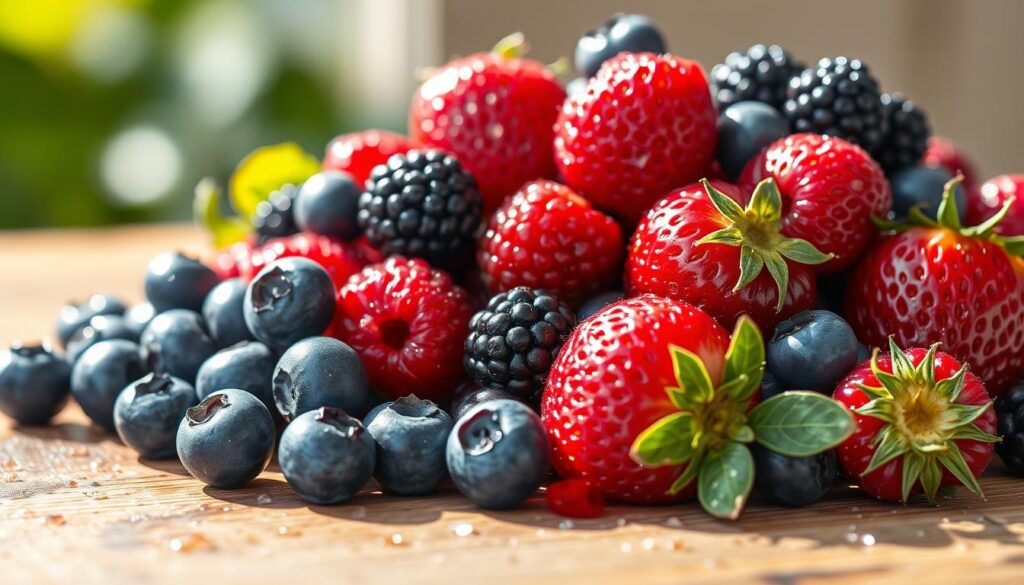
Antioxidant-rich berries, like blueberries, boost memory12. They protect the brain from memory loss as we age13. A study showed that drinking two cups of wild blueberry juice daily improved memory by 30 percent after 12 weeks12.
Key benefits of these berries for memory include:
- High antioxidant content to protect the brain from age-related memory loss13
- Improved cognitive function and memory enhancement12
- Support for overall brain health and well-being
Other foods like fatty fish, whole grains, and nuts also boost brain health13. Eating a balanced diet, exercising regularly, and living a healthy lifestyle support brain health and memory.
| Foods | Benefits for Brain Health |
|---|---|
| Antioxidant-rich berries | High antioxidant content to protect the brain from age-related memory loss13 |
| Fatty fish | Support for overall brain health and well-being13 |
| Whole grains | Complex carbohydrates to provide a steady energy source for the brain13 |
Dark Chocolate: Your Study Companion
Dark chocolate is a great study snack, often overlooked but full of benefits. It has a lot of cacao content. Studies show dark chocolate can help your brain health14. It’s perfect for students wanting to improve focus and memory.
Dark chocolate’s cacao content is packed with antioxidants. Eating it can boost blood flow to the brain, helping your brain work better15. For the best benefits, pick dark chocolate with high cacao content.
Best Ways to Consume Dark Chocolate
To enjoy dark chocolate as a study snack, follow these tips:
- Choose dark chocolate with at least 70% cacao content for the highest flavonoid levels.
- Consume it in moderation due to its calorie content.
- Pair it with other study snacks like nuts or fruits for a balanced energy boost.
Adding dark chocolate to your study routine can improve focus and memory. It’s a great snack for students14. Always choose the darkest chocolate you can find for the most benefits.
Nuts and Seeds for Mental Clarity
Nuts and seeds are packed with nutrients that boost brain health and mental focus. Walnuts, for instance, have up to 20 percent protein and are full of omega-6 and omega-3 fatty acids. These are key for brain cell membranes16. Almonds, on the other hand, are loaded with vitamin E, riboflavin, iron, magnesium, and L-carnitine. They make a great snack for keeping your mind sharp16.
Cashews, pecans, and flax seeds also offer brain benefits. Cashews have over 80 nutrients and help increase brain oxygen flow. Pecans fight against motor neuron degeneration and are full of vitamin E and choline16. Flax seeds are rich in omega-3 fatty acids, which help reduce stress and support brain health16.
The main advantages of nuts and seeds for mental clarity include:
- Rich in antioxidants and essential fatty acids
- Support cognitive function and brain cell health
- May help alleviate stress responses and support mood regulation
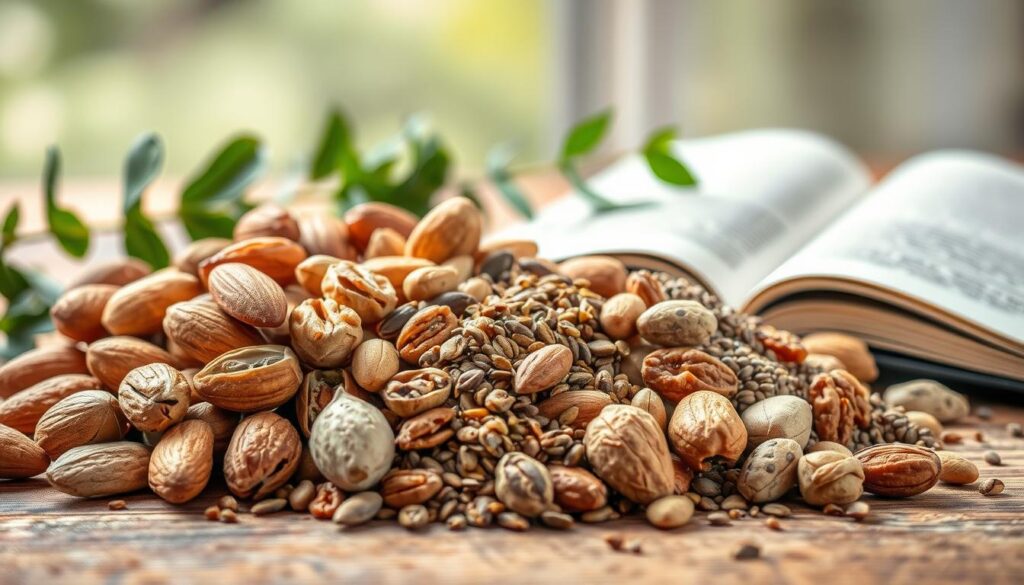
Adding nuts and seeds to your diet can greatly improve mental clarity and brain health. By eating a mix of walnuts, almonds, cashews, and flax seeds, you can keep your brain sharp all day161718.
| Nut/Seed | Key Nutrients | Benefits for Brain Health |
|---|---|---|
| Walnuts | Protein, omega-6 and omega-3 fatty acids | Supports brain cell membranes and cognitive function |
| Almonds | Vitamin E, riboflavin, iron, magnesium, L-carnitine | Supports mental clarity and overall brain health |
| Cashews | Over 80 nutrients, including magnesium and copper | Supports increased oxygen flow to the brain and mood regulation |
Green Leafy Vegetables and Brain Function
Green leafy vegetables are key for a healthy brain. They are packed with antioxidants and nutrients19. Eating at least one serving a day can help slow down brain decline, a study in Neurology found19.
Spinach, kale, and Swiss chard are great for your brain. They have B vitamins and folate, which help lower homocysteine levels. This reduces the risk of cognitive problems20.
Green leafy vegetables offer many benefits for the brain:
- They lower the risk of cognitive decline and Alzheimer’s disease.
- They improve memory and cognitive performance.
- They support brain development and function.
To get these benefits, add green leafy vegetables to your diet. Also, eat fatty fish, nuts, and whole grains21. A balanced diet with these foods can keep your brain healthy and lower disease risk20.
Eating green leafy vegetables regularly, along with other healthy foods, boosts brain function and overall health19. Making smart food choices helps keep your brain sharp and reduces age-related decline21.
Whole Grains: Fuel for Extended Study Sessions
Exploring brain-boosting foods, I’ve learned how vital whole grains are. They help keep our minds sharp and give us energy for long study times22. Foods like brown rice, quinoa, and whole-wheat bread are packed with nutrients. They have complex carbs, omega-3s, and B vitamins that are good for our brains23.
Studies show eating whole grains can lower heart disease risk by 23% and type 2 diabetes risk by 30%22. They also boost our fiber intake by 10%, which is great for our digestive health22. The carbs in whole grains give us steady energy. This helps us stay focused and sharp during long study hours22.
Whole grains offer many benefits, including:
- Reduced risk of heart disease and type 2 diabetes
- Increased dietary fiber intake
- Improved concentration and cognitive performance
- Support for normal brain function
Adding whole grains to your diet can greatly benefit your brain and health. They’re full of nutrients and give us lasting energy. This makes them perfect for long study sessions22. So, include whole grains in your meals to boost your brain and do better in school23.
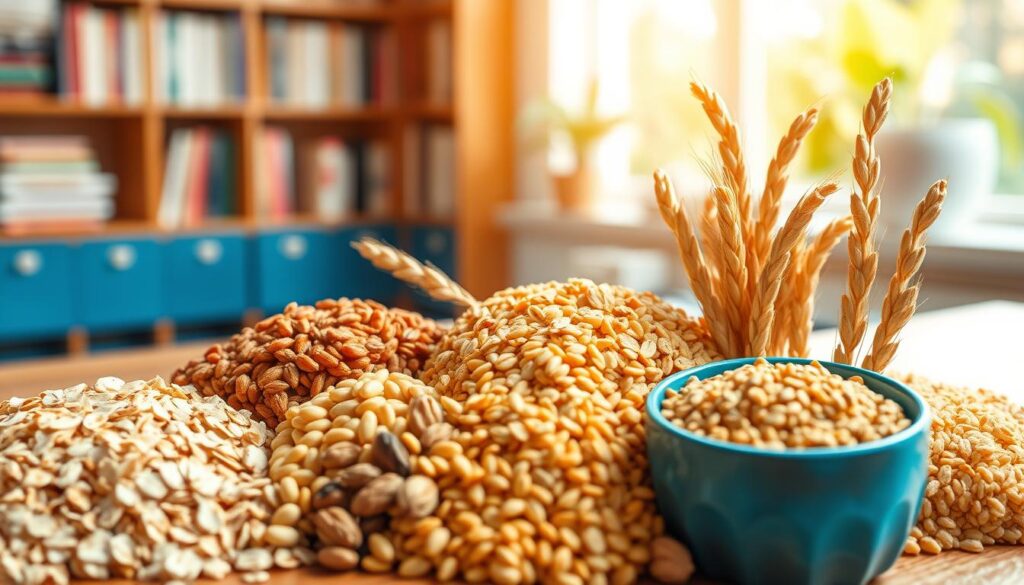
By eating whole grains regularly, you can improve your health and brain function. This leads to better grades and less chance of chronic diseases2223.
Hydration and Brain Performance
Drinking enough water is key for a sharp mind, which is important when you’re studying. Even a little dehydration can hurt your focus, attention, and memory24. It’s vital to drink water all day to stay sharp and alert. Good drinks for studying include water, herbal tea, and low-sugar sports drinks.
Other drinks can also help your brain. For example, coconut water gives you important electrolytes, and green tea has antioxidants that boost brain function25. But, it’s best to avoid sugary drinks and too much caffeine. They can mess with your hydration and brain power.
To keep your brain working well, drink at least eight glasses of water a day26. Also, eat foods that are full of water, like fruits and veggies. By focusing on hydration and picking the right drinks, you can help your brain and reach your study goals.
| Beverage | Hydration Benefits | Nutrient Content |
|---|---|---|
| Water | Essential for hydration | Zero calories, zero sugar |
| Herbal Tea | Antioxidant-rich, calming effects | Low calorie, high in antioxidants |
| Coconut Water | Natural source of electrolytes | Low calorie, high in potassium |
Quick Study Snacks for Immediate Brain Boost
As a student, it’s key to eat foods that help your brain stay sharp. Quick study snacks can give you an immediate brain boost. They help you get through study sessions and exams better. Nuts and seeds are great because they have essential fatty acids. These fats boost memory and help you focus27.
Some top quick study snacks include pumpkin seeds, bananas, and blueberries. Pumpkin seeds are packed with magnesium, copper, iron, and zinc. These nutrients are great for your brain health28. Bananas give you fiber, which helps keep your energy steady and improves focus28. Blueberries are full of antioxidants. Studies show they can make your memory better and slow down brain aging28.
Other quick study snacks that boost your brain include:
- Dark chocolate, which is full of antioxidants and natural stimulants that improve blood flow to the brain27
- Greek yogurt, which has more protein than regular yogurt, making it a great snack27
- Olives, which can lower oxidative stress in the brain because of their polyphenol content27
Adding these quick study snacks to your study routine can support brain health and give you an immediate brain boost. Choose snacks that are full of nutrients but low in added sugars and unhealthy fats. With the right quick study snacks, you can stay sharp, remember more, and do well in school28.

Foods to Avoid During Study Sessions
It’s key to eat the right foods when studying. Some foods can make it harder to think clearly. Avoid foods high in sugar, salt, and unhealthy fats. These can hurt your brain and memory29.
Drinking sugary drinks and eating processed snacks can raise the risk of Alzheimer’s and dementia29. Foods with lots of saturated and trans fats, like fried meats, can also harm your brain30. It’s important to not eat these foods to keep your brain healthy.
Here are some foods to steer clear of:
- Sugary drinks, such as soda and sports drinks29
- Processed meats, like hot dogs and sausages30
- Fried foods, such as french fries and fried chicken30
- High-fat dairy products, like butter and cheese30
Choose brain-boosting foods instead. Omega-3 rich fish, nuts, and leafy greens are good for your brain29. Making smart food choices can help you stay focused and sharp during study time.
Timing Your Brain Food Intake
Eating the right foods at the right time is key for brain health and cognitive function. A balanced diet with omega-3s, antioxidants, and complex carbs is best for your brain31. Eating these foods regularly can boost your brain health and thinking skills over time31.
Drinking water and getting enough sleep are also vital for your brain. Aim for 7-9 hours of sleep and drink lots of water to keep your brain sharp32. Adding physical activity to your day can also help your brain stay healthy32.
Simple changes like a balanced diet, staying hydrated, and enough sleep can greatly benefit your brain. Adding exercise and managing stress can also help keep your brain in top shape33. By focusing on your brain health, you can improve your overall well-being.
Meal Prep Ideas for Study Week
When you’re studying hard, it’s key to eat foods that boost your brain. Meal prep can save you time and make sure you eat well. Try overnight oats or scrambled eggs with whole-grain toast for breakfast34.
For lunch, aim for a mix of protein, carbs, and veggies. You can make salads, soups, or sandwiches ahead of time35. For dinner, go for grilled chicken or fish with veggies and quinoa or brown rice34.
Here are some healthy meal prep ideas for study week:
- Make a week’s worth of breakfast burritos or muffins
- Grill chicken or fish in bulk for salads or sandwiches
- Roast a big batch of veggies for snacks or sides
Adding these meal prep ideas to your study week can help your focus and memory35. Don’t forget to drink lots of water all day34.
Creating Your Brain-Boosting Meal Plan
To make a meal plan that boosts your brain, focus on foods that help your brain work well. Include foods rich in omega-3s, antioxidants, and whole grains. This mix of nutrients is key for a healthy brain36.
When planning your meal plan, remember these foods:
- Fatty fish for brain health and thinking skills36
- Blueberries and leafy greens for brain cell protection25
- Whole grains like brown rice and quinoa for energy and brain support
You can tailor your meal plan to fit your tastes. Some like study snacks like nuts and seeds for quick energy25. Others prefer whole foods like fruits and veggies for a balanced diet.
By eating these foods and drinking plenty of water, you help your brain stay sharp36. Avoid processed and sugary foods, as they harm brain health. A good meal plan can improve your thinking and overall health.
| Meal | Food |
|---|---|
| Breakfast | Oatmeal with nuts and seeds |
| Lunch | Grilled chicken with roasted vegetables |
| Dinner | Baked salmon with quinoa and steamed broccoli |
Building Long-term Healthy Eating Habits for Academic Success
Creating lasting healthy eating habits is key for doing well in school. It helps your brain learn, stay focused, and remember things better37. Adding good foods and snacks to your study time can boost your brain power and help you reach your goals.
To keep healthy eating habits, eat a balanced diet, drink lots of water, and avoid junk snacks31. It’s also important to watch how much you eat and when to keep your energy up all day. For those who are picky, try mixing new foods with ones they already like37.
Here are some ways to keep healthy eating habits:
* Eat lots of fruits and veggies for brain health33
* Include whole grains, lean proteins, and healthy fats in your meals for better thinking
* Cut down on sugary drinks and snacks to avoid energy drops and less focus
* Drink plenty of water all day37
By sticking to these tips and making healthy eating a main focus, you can help your school success and keep your brain healthy for a long time31.
| Food Group | Benefits for Brain Health |
|---|---|
| Fatty Fish | Rich in omega-3 fatty acids, which support learning and memory37 |
| Leafy Greens | High in antioxidants and other essential nutrients for cognitive function33 |
| Nuts and Seeds | Good sources of healthy fats and antioxidants for brain health31 |
Conclusion
Exploring brain-boosting foods shows how diet affects our brain and school success. Eating foods rich in omega-3s, antioxidants, and nutrients is key. These foods help our brains learn, remember, and do well38.
Eating a balanced diet with fruits, veggies, whole grains, and lean proteins boosts our brain power. It’s also important to drink plenty of water and avoid bad foods. These choices help keep our brains healthy39.
Adding brain-boosting foods to our study routine can help us reach our goals38. It’s all about being consistent. Making healthy eating a part of our daily life improves our brain function and overall health.
FAQ
What are the key brain-boosting foods that can enhance memory while studying?
Foods like fish and plant-based sources are great for your brain. Berries, dark chocolate, nuts, and green leafy veggies also help. They boost your memory while you study.
How does nutrition affect cognitive function and brain health?
Eating right is key for your brain. Omega-3s, antioxidants, and vitamins help your brain work well. They support memory, focus, and brain health.
What are the best ways to incorporate brain-boosting foods into a study routine?
Make quick snacks like nuts and dried fruits. Eat meals with omega-3s and berries. Include green veggies too. Timing your food and staying hydrated is also important.
What are the benefits of omega-3 rich foods for brain health?
Omega-3s in fish and plants are vital for your brain. They help with memory and thinking. They also reduce inflammation, boosting your study skills.
How can antioxidant-rich berries improve memory?
Berries like blueberries protect your brain. They support memory and help you learn better. Adding them to your study snacks can help a lot.
What are the benefits of dark chocolate for studying?
Dark chocolate boosts focus and memory. Its flavonoids improve blood flow to the brain. This makes you smarter during study time.
How can nuts and seeds support mental clarity?
Nuts and seeds are full of good stuff for your brain. They help you stay sharp and focused. Adding them to your study snacks is a smart move.
What are the top green leafy vegetables for brain health?
Spinach, kale, and Swiss chard are great for your brain. They’re packed with nutrients that support thinking and brain health.
How can whole grains fuel extended study sessions?
Whole grains like quinoa give you energy. They keep your blood sugar stable. This helps you stay alert and focused during long study times.
What are the best beverages for staying hydrated while studying?
Drink water, herbal tea, and low-sugar fruit infusions. Staying hydrated is key for your brain. It helps with memory and focus.
Source Links
- What are the 10 Best Foods to Boost Brain Function?
- 10 foods to boost your brainpower
- Feed Your Brain: Foods That Improve Memory and Cognitive Performance
- Brain foods: the effects of nutrients on brain function
- Boost Your Child’s Brain Power: Top Foods for Academic Success
- Brain Foods: Can What You Eat Improve Your Learning?
- Best Brain Foods for Studying | National University
- Foods That Improve Memory | Mass General Brigham
- 12 best brain foods: Memory, concentration, and brain health
- 11 Best Foods to Boost Your Brain and Memory
- Effects of Omega-3 Polyunsaturated Fatty Acids on Brain Functions: A Systematic Review
- Your Brain on Blueberries: Enhance Memory with the Right Foods
- Brain-Boosting Diet: 11 Foods to Improve Memory
- The Top 9 Brain Foods for Studying and Exams
- Beneficial Effects of Dark Chocolate for Episodic Memory in Healthy Young Adults: A Parallel-Groups Acute Intervention with a White Chocolate Control
- 7 Nuts and Seeds That Are Healthy Brain Fuel | Institute for Functional Health
- 5 Brain-Boosting Foods That Can Fight Dementia
- Nourish Your Mind: Foods That Support Brain Health
- How Adding Leafy Greens to Your Diet Could Help Your Brain
- Foods to Boost Brain Power and Enhance Brain Health | Vitamins
- 10 Best Foods To Improve Brain Health and Memory | Metropolis Healthcare
- 10 beneficial snacks for a long night of studying
- 15 “Brain Foods” That May Help Preserve Your Memory
- Best Foods for a Healthy Brain
- The Best Foods To Boost Your Brain Function
- Brain-Boosting Foods
- 8 super study snacks
- Top 10 Brain Food Snacks: Boost Focus and Productivity
- The 7 Worst Foods for Your Brain
- The Worst Foods for Your Brain
- Boost brain power with the right nutrition
- Memory loss: 7 tips to improve your memory
- Food for thought: How diet affects the brain over a lifetime
- Stress-Free Eating Tips for Exams
- Top 15 Brain Foods for Studying: Boost Focus and Memory
- Top 5 Foods for Cognitive Health
- The Connection Between Nutrition and Learning for Kids
- 5 Foods That Are Proven to Improve Brain Health | Tomah Health
- Brain-Boosting Nutrition: The Connection Between Diet and Brain Health


