Exploring tooth color reveals it’s shaped by genetics, lifestyle, and the environment1. The link between tooth and skin color is intriguing. I’m curious about how my tooth color relates to my skin. This connection is complex, yet I’m eager to learn about the factors that influence tooth color.
Understanding tooth and skin color can boost our confidence and health. As I dive into this topic, I see how vital tooth color is for our oral health. It’s shaped by genetics, lifestyle, and the environment1. The bond between tooth and skin color is intriguing, and I’m excited to uncover more.
Key Takeaways
- Tooth color is affected by intrinsic and extrinsic factors, including genetics, lifestyle habits, and environmental factors1.
- The connection between tooth color and skin color is a complex one, and understanding this connection can have a significant impact on our self-confidence and overall health.
- Genetics play a critical role in tooth color, and lifestyle and environment also have an impact.
- Knowing about tooth color and its link to skin can guide our oral health choices.
- The skin color connection to tooth color is a fascinating topic that needs more study.
Understanding Natural Tooth Color Variations
Many factors can affect tooth color. Natural tooth color comes from both inside and outside the tooth. This includes how light scatters and is absorbed by the enamel and dentine2. So, the color of our teeth is not just about the enamel but also the dentine underneath.
The genetics tooth color is a big player in our natural tooth color. Studies show that our genes can make our teeth whiter or yellower3. Our diet and lifestyle also play a part in our tooth color.
Every person’s natural tooth color is different. Some teeth are more transparent, while others are more opaque. This difference is normal and can be due to genetics and environment4.
In summary, knowing about natural tooth color variations is key for good oral health and a beautiful smile. By understanding what affects tooth color, we can take care of our teeth. This helps them stay healthy and strong for a long time.
The Biological Connection Between Skin and Tooth Color
Research has found a link between skin and tooth color. Certain skin tones are more likely to have discolored teeth5. This is key for keeping our mouths healthy. The amount of melanin in our skin affects both our skin and tooth color.
Knowing this can help us prevent tooth discoloration. People with specific skin tones might need to focus more on oral care. Genetics, diet, and lifestyle also play a role in tooth color.
Environmental factors like diet and lifestyle also affect tooth color. Some foods and drinks can stain teeth, while good oral hygiene keeps them looking natural. Understanding this connection helps us make better choices for our teeth6.
But, tooth color isn’t just about skin tone. Natural tooth shade and dental work also matter. By looking at all these factors, we can take a complete approach to oral health. This way, we can keep our teeth looking their best.
Genetic Factors Influencing Your Tooth Color
Genetics have a big role in tooth color, with hereditary traits and melanin playing a part in tooth development7. Research shows that tooth color is linked to melanin, the same pigment found in skin and hair8.
Tooth development is complex, and genetics tooth color is a part of it. Studies reveal that genetics can shape dental enamel, which is mostly mineral, some organic material, and water7. Knowing this helps in keeping teeth healthy and addressing color concerns.
Some important points about genetics and tooth color include:
- Hereditary traits can affect tooth color and shape.
- Melanin is key in tooth development and color.
- Genetic effects differ among people and ethnic groups.
Understanding genetic impact on tooth color helps individuals grasp their dental uniqueness. It encourages steps to keep teeth healthy8.
What Determines Your Tooth Color? A Scientific Explanation
Knowing what determines your tooth color is key for good oral health. Tooth color comes from both inside and outside factors. These include genetics, lifestyle, and the environment9. Research shows that plaque and tartar buildup is the main cause of discoloration. This can be stopped with regular cleanings and good oral care10.
Your tooth color can also change because of what you eat and drink. Eating sugary or acidic foods can stain your teeth10. Some medicines and health conditions can also affect tooth color9. Knowing these can help keep your smile bright and healthy.
Some people might think their teeth look whiter because of their lipstick. Lipsticks with cool tones, like plum or bright red, can make teeth seem whiter11. But, this doesn’t replace the need for good oral hygiene. Regular dental visits and a healthy lifestyle are vital for a beautiful smile.

Environmental Factors Affecting Tooth Shade
Exploring tooth color factors, we see the big role of environment, diet, and lifestyle. These can make our teeth look yellow, brown, or discolored. Studies show that diet and lifestyle can change tooth color, causing stains and discoloration12.
What we eat and drink can stain our teeth. Coffee, tea, and red wine are big culprits. A diet full of sugar and acid can also harm our teeth12. Smoking and poor dental care add to the problem.
As we get older, our teeth naturally change color. This is due to stains and enamel thinning12. Keeping our teeth clean and visiting the dentist regularly can help. Avoiding bad habits is also key.
Knowing how environment, diet, and lifestyle affect tooth color helps us take action. We should watch what we eat and drink, avoid harmful habits, and take care of our teeth12. This way, we can keep our teeth white and healthy.
Common Causes of Tooth Discoloration
Tooth discoloration can happen for many reasons. These include poor oral hygiene, smoking, and certain foods and drinks13. These factors can cause teeth to look yellow or severely stained.
Extrinsic factors, like coffee, tea, and red wine, are responsible for about 50% of tooth discoloration14. Intrinsic factors, such as some medications and diseases, cause around 30%14. Also, as people get older, their teeth tend to get more discolored, starting around age 3014.
Some common reasons for tooth discoloration include:
- Poor oral hygiene, leading to plaque and tartar buildup13
- Smoking, causing brown stains on teeth13
- Certain foods and drinks, like coffee and red wine, causing extrinsic staining14
Regular dental check-ups are key for catching discoloration early and keeping teeth healthy13. Knowing the common causes helps prevent or lessen discoloration. This includes good oral hygiene and avoiding stain-causing foods and drinks.
Professional Methods for Determining Tooth Color
Professional methods are key for finding the right tooth color. They include digital shade analysis, traditional shade guides, and color matching techniques15. These are vital for keeping teeth healthy and looking their best.
Digital shade analysis uses electronic devices to measure tooth color. It can detect over 10 million shades, beating the human eye’s 1% accuracy16. Traditional shade guides, like the Vita Classical Shade Guide, have 16 tabs16.
Color matching techniques use spectrophotometers for better accuracy, a 33% boost over the human eye16. These methods are critical for matching colors in dental work. Dentists use these to ensure patients get the best results, from cleanings to complex procedures.
Dentists also use the Munsell color system, with hue, value, and chroma dimensions16. By combining these tools, dentists can give patients the most accurate tooth color results. With digital shade analysis, traditional guides, and color matching, patients can get the smile they want.
Natural Ways to Maintain Tooth Color
Good oral hygiene is key to keeping teeth white. The first web source says brushing and flossing stop plaque buildup, which can stain teeth17. Eating less sugar and acid helps too. Foods like apples and carrots clean teeth naturally because they’re full of fiber and water.
Staying away from certain foods and drinks is also important. Dark foods and drinks, like coffee and red wine, can stain teeth17. Smoking also causes stains. Regular dental cleanings remove plaque and tartar, which can discolor teeth18.
Here are some natural ways to keep teeth white:
- Brush teeth at least twice a day with fluoride toothpaste
- Floss daily to remove plaque and bacteria
- Use a fluoride mouthwash to strengthen tooth enamel
- Eat a healthy diet low in sugar and acid
- Avoid foods and drinks that stain teeth
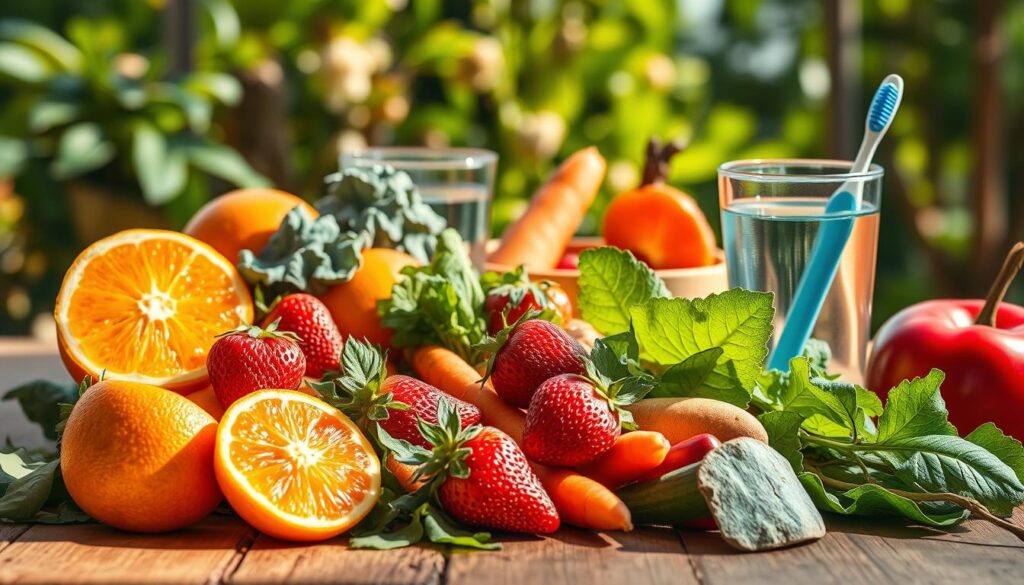
By following these tips, you can keep your teeth looking great. Regular dental visits catch problems early, preventing bigger issues19. With good care and a healthy diet, you can have a beautiful smile.
Professional Tooth Whitening Options
Professional tooth whitening is a top choice for a brighter smile. There are many methods, each with its own results. In the U.S., people spend about $1 billion a year on cosmetic dental work, with many choosing whitening20.
In-office treatments are quick, changing tooth shades in 30-60 minutes20. They use strong hydrogen peroxide, from 15% to 50%20. Home kits, with 10% carbamide gel, are also popular. They’re approved by the American Dental Association for at-home use21.
Professional whitening might need several visits, but some can be done in one20. The first session lasts 10-20 minutes, with more gel applied later. To keep teeth white, avoid foods like coffee and red wine21.
Here are some key points to consider when choosing a professional tooth whitening option:
- In-office treatments offer quick and significant results
- Take-home professional kits provide a more convenient and affordable option
- Regular dental visits and maintaining oral hygiene are key for keeping teeth white21
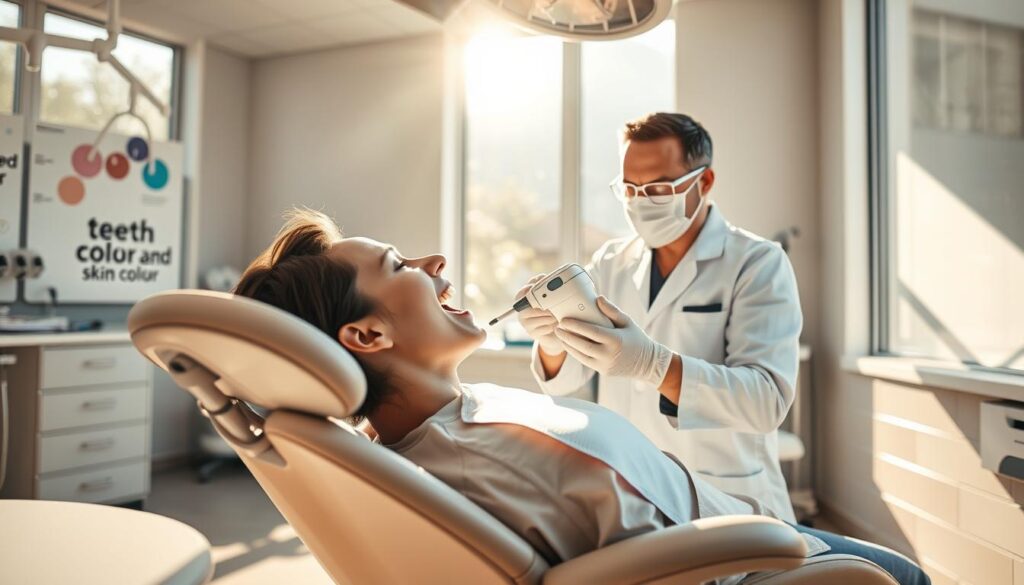
Understanding the options, like in-office and take-home kits, helps make better choices. This way, people can get the smile they want.
The Role of Oral Hygiene in Tooth Color
Good oral hygiene is key to keeping teeth looking their best. Regular brushing and flossing stop stains and discoloration22. These habits remove plaque and bacteria that can darken teeth. So, by brushing and flossing often, you can keep your teeth looking natural and avoid expensive whitening.
Other habits also play a part in tooth color. Drinking through a straw can cut down on tooth staining from coffee or tea23. Also, not smoking and eating less sugary snacks helps keep teeth clean and bright.
Good oral hygiene is essential for healthy-looking teeth. By following good habits, you can prevent teeth from getting discolored24. This boosts your confidence and keeps your mouth healthy.
Understanding Tooth Color Changes Over Time
Tooth color changes can happen for many reasons. These include getting older, health issues, and some medicines. As we get older, our teeth lose their shine and can get discolored. The second web source says tooth color changes with age, health issues, and medicines25.
Our enamel wears down, revealing the dentin underneath. This makes teeth look yellow or brown. Medical problems like gum disease or tooth decay can also change tooth color. Some medicines, like tetracycline, can make teeth discolored too.
The first web source mentions tetracycline as a common cause of tooth discoloration, with 106 cases26. Other drugs, like salmeterol and fluticasone, can also affect tooth color.
Keeping your teeth healthy is key to preventing color changes. Regular dental visits and a healthy diet help fight tooth decay and gum disease. Avoiding too much sugar and brushing and flossing daily also helps keep teeth white. The third web source says regular dental visits can lower severe discoloration by 30%27.
Knowing why tooth color changes helps us take better care of our teeth. Being aware of what causes discoloration lets us make better dental choices. With the right care, we can keep our smile bright and healthy for a long time.
Myths and Facts About Tooth Color
There are many myths and facts about tooth color that can shape our view of oral health. One myth is that tooth color is only based on genetics28. But, it’s not just genetics. Diet, lifestyle, and the environment also play a role.
Teeth can change color over time because of stains. Things like coffee, tea, and tobacco can cause this. Some people are born with teeth that are naturally whiter or darker because of their genes28.
There are also myths about tooth whitening. Some think it can harm the teeth, but it’s not always true. Many whitening products are safe and can even make teeth stronger29.
In summary, knowing the truth about tooth color is key to good oral health. By understanding what’s real and what’s not, we can take better care of our teeth. This helps keep them healthy and strong.
When to Seek Professional Help for Tooth Color Concerns
We often ignore tooth color issues until they get serious. It’s key to know when to get help. Signs like discoloration or sensitivity mean you might have a bigger problem30.
Look out for signs like tooth discoloration, sensitivity, or pain from hot or cold foods. If you see these, see a dentist right away31.
Finding the right dentist is important for your smile. They can fix problems and give you tips for a healthy smile. Regular visits can stop discoloration and keep your mouth healthy32.
When picking a dentist, look at their cosmetic dentistry skills, patient care, and tech use. A good dentist will fix your smile problems well and fast.
In short, getting help for tooth color issues is key for a healthy smile. Spotting warning signs and choosing the right dentist helps fix problems and stops more from happening. Always care for your teeth and visit the dentist regularly for a bright, confident smile.
Prevention Strategies for Maintaining Natural Tooth Color
Keeping your teeth white is key. Good oral hygiene, a healthy diet, and avoiding certain foods and drinks are vital. Regular brushing and flossing remove plaque and bacteria that cause stains. Eating fruits and vegetables helps keep teeth clean and healthy.
Limiting foods and drinks that stain teeth is important. This includes coffee, red wine, and cola. Using a straw when drinking these can help. Quitting smoking or using tobacco also prevents tooth discoloration. A diet rich in calcium, like milk and cheese, protects teeth from erosion.
Regular dental cleanings and check-ups are also essential. They remove plaque and tartar that cause stains. By following these steps, you can keep your teeth white and prevent discoloration.
Conclusion: Embracing Your Natural Tooth Color While Making Informed Choices
I think embracing our natural tooth color is key to a healthy, confident smile33. We’ve looked at how skin color and tooth shade are connected. We’ve also seen how genetics, environment, and lifestyle affect our teeth’s color.
Even with new dental tech, choosing wisely is vital for our oral health34. Knowing about our tooth color and what affects it helps us care for our smile. This way, we can choose the best options for us.
For a beautiful, healthy smile, we must love our natural tooth color33. Good oral care and professional advice are also important. This approach helps us look good and keep our teeth and gums healthy for years.
FAQ
What determines my tooth color?
Your tooth color comes from genetics, lifestyle, and the environment. Knowing why your teeth look the way they do helps keep them healthy and looking good.
How are natural tooth color variations affected by genetics?
Genetics shape your tooth color. They affect the tooth’s structure and shade. This knowledge is key to keeping your teeth healthy.
Is there a biological connection between skin color and tooth color?
Yes, your skin and tooth colors are connected. Certain skin tones can make your teeth look different. Understanding this helps keep your teeth healthy.
How do genetic factors influence my tooth color?
Genetics play a big role in your tooth color. They influence the tooth’s structure and shade. Ethnic differences in tooth color also come from genetics.
What scientific factors determine my tooth color?
Your tooth color is shaped by its structure and color components. Environmental factors also play a part. Knowing this helps keep your teeth healthy and looking good.
How do environmental factors affect my tooth shade?
Your diet, lifestyle, and age can change your tooth shade. Recognizing these factors is important for your oral health.
What are the common causes of tooth discoloration?
Poor oral hygiene, smoking, and certain foods can discolor teeth. Knowing the causes helps you keep your teeth healthy.
How do professionals determine tooth color?
Dentists use digital analysis and traditional guides to find your tooth color. These methods help keep your teeth looking their best.
What are the natural ways to maintain my tooth color?
Good oral hygiene and a healthy diet help keep your teeth looking good. Avoiding certain foods and drinks also helps.
What are the professional tooth whitening options available?
You can get in-office whitening or use take-home kits. Always talk to a dentist before starting any whitening treatment.
How does oral hygiene affect my tooth color?
Brushing and flossing regularly is key to keeping your teeth looking good. Good oral hygiene is essential for your tooth color.
How do tooth color changes occur over time?
Age, medical conditions, and medications can change your tooth color. Understanding these changes is important for your oral health.
What are the myths and facts about tooth color?
Many myths surround tooth color, like it’s only genetics. Knowing the truth helps you make better choices for your teeth.
When should I seek professional help for tooth color concerns?
If you notice any tooth color changes, see a dentist. They can diagnose and treat any issues, ensuring you choose the right professional.
How can I prevent changes to my natural tooth color?
Keep your teeth clean, eat well, and avoid certain foods. These steps help keep your teeth looking their best.
Source Links
- Do Veneers Achieve Natural Tooth Look?
- The Art of Crafting Porcelain Veneers: A Detailed Insight
- Do porcelain veneers look natural?
- What is the use of teeth color chart for?
- A shark-inspired general model of tooth morphogenesis unveils developmental asymmetries in phenotype transitions
- An Intrinsic Oscillation of Gene Networks Inside Hair Follicle Stem Cells: An Additional Layer That Can Modulate Hair Stem Cell Activities
- Dental Enamel Formation and Implications for Oral Health and Disease
- Frontiers | Facial Genetics: A Brief Overview
- Frontiers | Drug-induced tooth discoloration: An analysis of the US food and drug administration adverse event reporting system
- What Is the Difference Between Plaque and Calculus? – Dental Partners of Boston
- What Lipstick Color Can Make Your Teeth Look Whiter? | L’Oréal Paris
- Blue Eyes: Unveiling the Genetics Behind the Hue
- Causes of Teeth Discoloration: Diseases and Treatments
- Tooth Discoloration Causes and Treatments
- Perception of dental appearance and aesthetic analysis among patients, laypersons and dentists
- An Overview of Shade Selection in Clinical Dentistry
- 10 Causes of Black Spots on Teeth
- 8 Cost Effective Ways to Keep Your Teeth Healthy – Blog – Incredible Smiles
- Unveiling The Secret To Dazzling Teeth
- Teeth Whitening: Everything You Should Know About Whiter Teeth – WPDC
- Teeth whitening: tips & real expectations from a dental hygienist
- Effect of Zinc on improving silver diamine fluoride-derived tooth discoloration in vitro – BMC Oral Health
- Prevalence, satisfaction and preference of tooth…
- Thieme E-Journals – European Journal of Dentistry / Full Text
- Understanding Changes in Baby Teeth Color Before Falling Out
- Drug-induced tooth discoloration: An analysis of the US food and drug administration adverse event reporting system
- Use of a new skin colour measurement method for the investigation of relationship between skin and tooth colour. – Abstract
- Avoiding Common Tooth Display Esthetic Errors
- Understanding The Teeth Whitening Facts & Myths
- A Guide to Choosing the Correct Color Shade for Dental Veneers
- Causes of Tooth Discoloration and How to Prevent and Treat It
- Causes of Post-Braces Stains on Teeth, How to Remove Them
- This Feature Of My Smile Links Me To My Roots — And I’m Not Getting Rid Of It
- Emerging Science and Promising Technologies to Transform Oral Health – Oral Health in America