

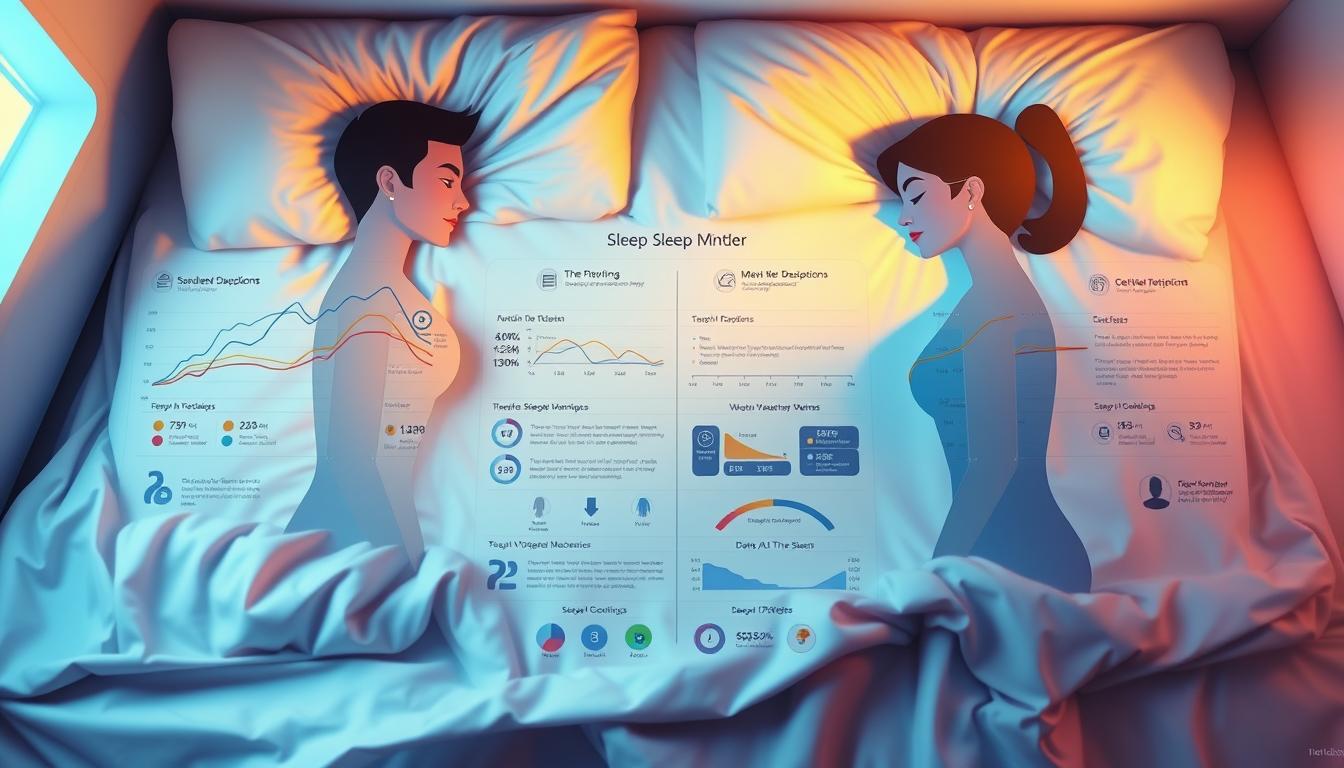
Did you know women have more nightmares than men? Studies show women dream more intensely1. This makes us wonder: who sleeps more, men or women? Let’s dive into the sleep patterns by gender and find out the truth.
It’s important to understand who sleeps more, men or women. Women remember their dreams more clearly than men1. This could be due to differences in sleep patterns and gender. We’ll look at why there’s a gap in sleep and nightmares, including hormones and societal pressures1.
Key Takeaways
- Women experience more nightmares than men, with a higher frequency of intense dreams1.
- Sleep patterns by gender differ, with women being more likely to recall their dreams with greater clarity1.
- Hormonal fluctuations in women can alter sleep patterns and increase the occurrence of nightmares1.
- Societal gender-based oppression and discrimination may contribute to increased nightmares in women1.
- Understanding sleep statistics men vs women is key to knowing who sleeps more, men or women.
- Dream wars: who sleeps more, men or women, is a complex topic that requires exploration of sleep patterns by gender.
- Sleep patterns by gender and sleep statistics men vs women can help us better understand the dream wars.
Understanding the Sleep Gender Gap
Men and women have different sleep habits. Research shows these differences can affect health and wellbeing2. Hormones play a big role in sleep patterns. For example, women’s sleep changes with their menstrual cycle and menopause2.
Studies show women often have nightmares and poorer sleep than men3. Women’s dreams are more emotional and deal with relationships. Men’s dreams are often aggressive and action-packed2. These differences help us understand the sleep gap between men and women.
Some interesting facts about sleep habits exist. For example, 61% of women dream about a loved one passing, compared to 39% of men3. Women also remember their dreams more often, with 43% recalling them weekly, versus 41% of men3. Knowing these differences helps us find ways to improve sleep for everyone.
Looking into the sleep gender gap helps us understand sleep, hormones, and brain structure better. This knowledge can lead to better sleep and health for both men and women2.
Dream Wars: Who Sleeps More, Men or Women?
Research shows that women often face sleep disruptions, like during puberty, menarche, and menopause4. Hormonal changes play a big role in this, affecting gender and sleep quality. Studies found that female mice can handle sleep loss better because of these hormones4.
Men, on the other hand, are more prone to violent sleep behaviors like sleepwalking and sleep terrors5. This could be due to genetics, stress, or substance use. Also, nightmares are more common in women than men6.
So, who sleeps more, men or women? It’s not simple. It varies with age, lifestyle, and health. But one thing is clear: sleep duration by gender and gender and sleep quality are complex topics needing more study.
The Science Behind Gender Sleep Patterns
Studies reveal big differences in men vs women sleep patterns. Women usually sleep longer than men, about 20-30 minutes more each night7. Hormones and brain structure play a big role in these differences. A sleep study gender differences showed women spend more time in REM sleep than men, sometimes up to 1.5 hours more7.
Some key differences in sleep patterns between men and women include:
- Women often dream about family, while men dream about physical fights8.
- Men dream in the third person, while women dream in the first person8.
- Women have more realistic lucid dreams, while men have more controlled ones8.
It’s important to understand these differences to improve sleep quality. By knowing the unique sleep needs of men and women, we can help everyone sleep better9.
Social and Lifestyle Factors Affecting Sleep
Many social and lifestyle factors can change how well we sleep, showing gender differences in sleep10. For example, stress and anxiety can mess up our sleep, and women often face poor sleep quality because of these10. Also, habits like irregular sleep times, not moving enough, and too much caffeine can harm our sleep11.
A study showed women have more insomnia than men in places like the UK, the Netherlands, and the US12. Older adults, 65 and up, are more likely to have trouble sleeping. But, people between 26 and 40 years old usually sleep better12. It’s clear that our social and lifestyle choices affect our sleep, and knowing this helps us improve our sleep quality.
Some important factors that affect sleep include:
- Stress and anxiety10
- Lifestyle habits, such as irregular sleep schedules and lack of physical activity11
- Age, with adults aged 65 years and older being more likely to experience insomnia12
By understanding how social and lifestyle factors impact sleep, we can work on bettering our sleep. This means adopting healthy habits, managing stress, and making our sleep environment better11. By making these changes, we can improve our sleep and overall health.
Common Sleep Disorders by Gender
Sleep disorders can really hurt sleep quality and sleep duration. They can affect our health and happiness. Women are almost 60% more likely to have insomnia than men13. This shows why we need to know about sleep disorders in both genders.
Insomnia, sleep apnea, and restless leg syndrome are common sleep disorders. Women sleep about eight minutes more than men in non-REM sleep13. Women are also up to four times more likely to have a sleep-related eating disorder13. These facts show we need different ways to help men and women with sleep issues.
Hormones, brain structure, and lifestyle play a big role in sleep disorders. For example, women’s body clocks are about five times more out of sync than men’s13. Knowing this can help us improve our sleep quality and sleep duration. This can lower the chance of sleep disorders and health problems.
Understanding the differences in sleep between men and women is key. We can then create better ways to help everyone sleep well. This includes spreading the word about sleep quality and sleep duration. We also need to offer help and support for those with sleep disorders, like those with high insomnia prevalence13.
Measuring and Tracking Sleep Quality
It’s key to measure and track sleep quality to spot sleep deprivation and boost sleep hygiene. A big chunk of Americans, 57%, say they’d feel better with more sleep14. This shows how vital it is to watch sleep patterns to better our health.
Sleep diaries and wearable devices help track sleep quality. They let people spot patterns and tweak their sleep habits. For example, setting a regular sleep schedule and having a calming bedtime routine are good steps. Knowing the right sleep time for each age group, like 7-9 hours for adults15, also helps.
Sleep deprivation can really mess with our daily lives, affecting our thinking and raising disease risks. So, making sleep a top priority is vital. By tracking sleep quality and practicing good sleep hygiene, we can lower sleep deprivation risks and enhance our health16.

When measuring and tracking sleep quality, consider these points:
* How long you sleep
* Your sleep schedule
* Your sleep environment
* How active you are
Using tools like sleep diaries and wearable devices helps understand sleep patterns. This way, people can make smart choices to improve their sleep habits.
How to Optimize Your Sleep Based on Gender
It’s key to know the sleep differences between men and women to improve sleep quality. Studies show women need about 20 more minutes of sleep each night than men17. This shows why it’s vital to tailor sleep plans to fit individual needs.
Looking at sleep habits, men and women face different challenges. For instance, 40% of men snore, while only 24% of women do, impacting women’s sleep17. Women also face sleep issues due to hormonal changes and other factors.
To better sleep based on gender, here are some tips:
- Stick to a regular sleep schedule and bedtime routine
- Make your bedroom a sleep-friendly space, like keeping it cool and dark
- Stay away from bright screens and stimulating activities before bed
By focusing on the unique sleep needs and challenges of each gender, you can craft effective sleep plans. This can lead to better sleep quality and duration for both men and women16.

Optimizing sleep is a personal journey. What works for one might not work for another. By understanding the sleep differences and taking a personalized approach, you can enhance your sleep and well-being18.
| Age Group | Recommended Sleep Duration |
|---|---|
| Newborns | 14-17 hours |
| Infants | 12-15 hours |
| Teens | 8-10 hours |
| Adults | 7-9 hours |
| Seniors | 7-8 hours |
Conclusion: Bridging the Gender Sleep Gap
Our journey into the world of gender and sleep has shown us much. The19 differences in dreams, emotions, and character are fascinating. We need more research to understand these differences fully.
Even though women sleep a bit more than men20, both can improve their sleep quality. Knowing what affects sleep for each gender helps us find better ways to rest.
The gender sleep gap affects us all, not just personally but also society-wide21. Differences in sleep might make career and education gaps worse. By tackling these issues, we can help everyone succeed in work and life.
I urge us to keep researching, talking, and finding solutions to close the gender sleep gap. Understanding the biological, social, and lifestyle factors can lead to a fairer, more rested world for everyone.
FAQ
Who sleeps more, men or women?
Women usually sleep more than men. Studies show women get about 30 minutes more sleep each night.
What are the biological differences in sleep patterns between men and women?
Hormones, brain structure, and circadian rhythms play a role in sleep differences. Women often have more REM sleep and a steady sleep-wake cycle. Men, on the other hand, may have more broken sleep and less REM sleep.
Do men and women have different dream experiences?
Yes, men and women dream differently. Women’s dreams are often more vivid, emotional, and filled with anxiety. Men’s dreams tend to be more aggressive and violent.
What are the social and lifestyle factors that affect sleep differently for men and women?
Stress, anxiety, and work-life balance affect sleep differently for men and women. Women often handle more household and caregiving tasks, leading to higher stress and poorer sleep.
What are the common sleep disorders that affect men and women differently?
Men are more likely to have sleep apnea. Women, on the other hand, face higher rates of insomnia and restless leg syndrome. These differences stem from both biological and social factors.
How can I optimize my sleep based on my gender?
Adjust your sleep strategies to fit your gender-specific needs. For example, men might do better with earlier bedtimes and structured sleep schedules. Women may find relaxation techniques and stress management helpful.
Source Links
- Bad Dream? Women Have More Nightmares Than Men — Here’s Why
- How the gender divide reaches into our nightmares
- Bugs, lost teeth and ‘technology malfunctions’: Why men and women dream very differently
- Neuroscientists discover women and men handle sleep deprivation differently
- The spectrum of disorders causing violence during sleep – Sleep Science and Practice
- Nightmares and Disorders of Dreaming
- Dreams (Part II) – The Neuroscience of Sleep and Dreams
- Sleep, dreams, nightmares, and sex-related differences: a narrative review
- Adaptive Solutions to the Problem of Vulnerability During Sleep – Evolutionary Psychological Science
- Influence of Sleeping Patterns in Health and Academic Performance Among University Students
- Genetic and Environmental Influences on Sleep Quality in Middle-Aged Men: A Twin Study
- More women than men struggle to fall asleep in both Europe and the US, study finds | CNN
- Women DO sleep worse than men, scientists say
- Dream on – or don’t. Americans say they aren’t getting enough sleep
- Sleep | Health Psychology
- Sleep medicine: Practice, challenges and new frontiers
- SLEEP NEEDS BY AGE AND GENDER – Sound of Sleep
- Sleep and circadian rhythm in brain and mental health
- Our dreams, our selves: automatic analysis of dream reports
- Sleep in the United States Military
- Women Did Everything Right. Then Work Got ‘Greedy.’ (Published 2019)


