A recent study showed that AI could boost global food production by 70% by 2050. This finding highlights AI’s huge impact on our food systems.
We’ll explore how AI is changing the food industry. It’s affecting everything from farming to how we eat. AI is making food production more efficient and personalized, helping us waste less.
Key Takeaways
- AI has the potential to increase global food production by 70% by 2050
- AI is transforming agriculture, supply chains, and consumer experiences in the food industry
- Precision farming, supply chain optimization, and personalized nutrition are some of the key areas where AI is making a significant impact
- AI-driven technologies are enhancing sustainability and reducing food waste
- The integration of AI in the food industry is reshaping the future of global food systems
The Digital Revolution Transforming Our Food Production
Food production is changing fast, thanks to new technology. Precision farming, automated farming, and smart food logistics are leading this change. They’re changing how we grow, move, and eat food.
Understanding the Tech-Food Nexus
New tech like AI, machine learning, and the Internet of Things is changing farming. Farmers can now use data to make better choices. This helps them use resources better and grow more food.
Key Drivers of Agricultural Innovation
- Precision farming uses sensors and GPS to grow more food and waste less.
- Automated farming, like robots and self-driving tractors, makes farming easier.
- Smart food logistics use data to improve how food is moved and cut down on waste.
Current Market Impact and Future Projections
New tech is already changing the food market. For example, precision farming can grow 15% more food while using 25% less water and fertilizer. As these techs get better, we’ll see even more improvements in farming.
| Technology | Current Impact | Future Projections |
|---|---|---|
| Precision Farming | 15% increase in crop yields, 25% reduction in water and fertilizer usage | Continued optimization of resource management, enhanced decision-making for farmers |
| Automated Farming Technologies | Improved labor efficiency, reduced operational costs | Widespread adoption of autonomous machines, increased productivity and precision |
| Intelligent Food Logistics | Improved supply chain optimization, reduced food waste | Predictive analytics-driven distribution networks, enhanced traceability and transparency |
The digital revolution in food production is bringing big changes. With these new techs, we can make food systems better. They’ll be more sustainable, efficient, and fair for everyone.
From Data to Dinner: AI Reshaping Global Food Systems
In today’s fast-changing world, artificial intelligence (AI) is changing how we handle food globally. It’s making food systems more sustainable and secure. This meets the increasing demands of our planet.
The way we grow, share, and eat food is changing. AI helps farmers work smarter, grow more, and waste less. It’s making farming more sustainable and improving food security.
AI is making farming more precise. It helps farmers decide on water, pests, and crops better. This leads to more food and less harm to the environment. It’s making farming more sustainable and strong.
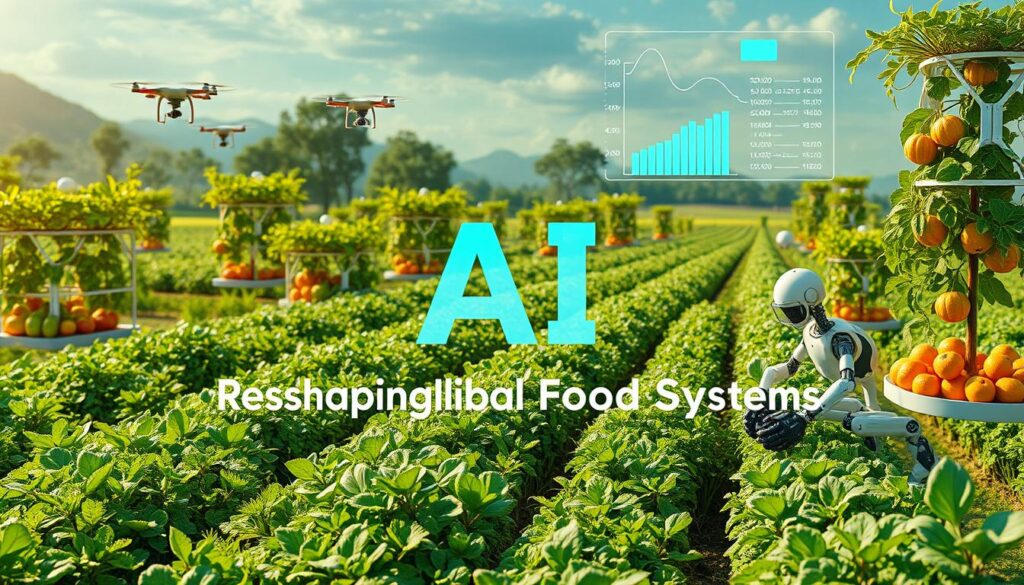
AI is also changing the food supply chain. It’s making logistics, distribution, and food safety better. AI uses data and blockchain to predict needs, cut waste, and keep food safe.
AI is a big hope for our food systems. It uses data and smart tech to make food better for everyone. With AI, we can make sure food is good for us and the planet.
Precision Agriculture: Smart Farming for the Future
Agriculture is changing fast, thanks to precision farming. This new way uses advanced tech like sensors, drones, and AI for irrigation. These tools are making farming more sustainable for the future.
Sensor Technology in Modern Farming
Modern farming uses many sensors to track important factors. These sensors check soil moisture, nutrient levels, pests, and crop health. This info helps farmers make better choices, use resources wisely, and grow more food with less harm to the environment.
Drone Applications for Crop Monitoring
Drones are key in precision farming. They fly over fields with cameras and sensors to spot issues early. This info helps farmers act fast to help their crops, making farming smarter and more efficient.
AI-Powered Irrigation Systems
AI helps control irrigation in farming. It uses sensor data and weather forecasts to water crops just right. This saves water and energy, making farming more sustainable.
As precision farming grows, it combines sensors, drones, and AI. This mix is leading to smarter, greener farming. Farmers can now grow more food with less waste, ensuring a good food supply for the future.
| Technology | Application | Impact |
|---|---|---|
| Sensor Technology | Monitoring environmental factors and crop health | Improved resource allocation and targeted interventions |
| Drone Applications | Aerial crop monitoring and early problem detection | Enhanced decision-making and quick response to issues |
| AI-Powered Irrigation | Precision water management based on sensor data and weather forecasts | Increased water efficiency and reduced environmental impact |
AI-Driven Supply Chain Optimization
In today’s fast-changing food world, AI is changing how we manage supply chains. It uses predictive analytics and traceability systems to make things run smoother. This means less waste and better efficiency.
AI helps us guess how much food we’ll need better than before. It looks at past sales, trends, and what people like to buy. This lets us plan better, making sure we have what customers want without wasting too much.
AI also makes tracking food easier than ever. It uses sensors, blockchain, and data analysis to follow food from start to finish. This makes food safer and helps us find and fix problems faster.
| Benefit | Description |
|---|---|
| Demand Forecasting | Predictive analytics to anticipate future demand for food products |
| Traceability | Real-time monitoring of product movement and conditions throughout the supply chain |
| Waste Reduction | Optimized production, inventory, and logistics to minimize food waste |
By using supply chain optimization, predictive analytics, and food traceability systems, we’re changing the food game. AI is opening up new possibilities for the food industry. The future of food looks very promising.
Food Traceability and Blockchain Integration
Blockchain technology is changing how we track food from farm to table. It makes food safer and more transparent for everyone.
Enhanced Food Safety Measures
Blockchain helps track food securely and clearly. It logs every step, from raw materials to delivery. This creates a permanent record for all to see.
This traceability helps find and stop bad food fast. It keeps us safe and builds trust in food.
Consumer Transparency Initiatives
Now, consumers can see where their food comes from. They get details on how it was made and where it went. This meets their desire for ethical food.
It also makes people feel closer to the food makers.
Blockchain Implementation Benefits
- Improved food safety and quality control
- Enhanced supply chain efficiency and visibility
- Increased consumer trust and brand loyalty
- Reduced incidence of food fraud and mislabeling
- Streamlined regulatory compliance and auditing processes
Blockchain is making food safer and more open. It’s changing how we make, share, and eat food. We’re moving towards a better, safer food world.
Sustainable Farming Practices Through AI
The digital revolution is changing farming. It’s making farming more sustainable. Artificial intelligence (AI) is leading this change. It helps farmers use resources better, reduce harm to the environment, and ensure long-term sustainability.
AI is making farming more precise. It uses sensors, satellite images, and analytics. This gives farmers detailed info about their crops and soil. They can then use this info to use water, fertilizers, and pest control better. This leads to less waste and more efficient farming.
AI is also key in reducing food waste. It uses algorithms to predict demand and improve supply chains. This means more food gets to those who need it. It’s good for the environment and makes food more accessible.
As we face the challenge of feeding more people, AI’s role in farming is crucial. It gives farmers the tools and data they need. This way, we can produce food while taking care of the environment.
Reducing Food Waste with Predictive Analytics
We’re working hard to change the way food is made and shared around the world. Food waste is a big problem, but predictive analytics is helping us tackle it. We’re using new tech to find smart ways to cut down on food waste in every part of the supply chain.
Smart Storage Solutions
Predictive analytics is changing how we store food. It uses old data and new sensor info to make storage better. This helps keep food fresh and stops it from going bad too soon.
Demand Forecasting Systems
Knowing how much food to make is key to not wasting it. Predictive analytics looks at lots of data to guess how much food people will buy. This way, we make just the right amount, saving food and money.
Optimization of Distribution Networks
Getting food from farms to tables without waste is another big goal. Predictive analytics helps us make delivery routes better. This cuts down on waste and makes the whole food chain more efficient and green.
We’re excited about what predictive analytics can do for food waste. With smart storage, better forecasting, and improved delivery, we’re shaping the future of food. We’re on our way to a more sustainable and efficient food system.
“By combining predictive analytics with intelligent food logistics, we can drastically reduce food waste and create a more efficient, sustainable food system.”
Personalized Nutrition and AI Recommendations
Artificial intelligence (AI) is changing how we think about food. It uses big data to give us diet plans that fit our health needs and likes. This tech helps us make better food choices, leading to better health and changing how we eat.
AI works by looking at lots of data, like health info and what we buy. It helps us get advice that’s just right for us. This means we can avoid generic diets and get plans that really fit our needs.
With AI, we can get meal plans and supplements that are just for us. We can even order groceries that match our diet. This makes it easier to reach our health goals and eat in a way that’s good for us and the planet.
FAQ
What is the role of AI in reshaping global food systems?
AI is changing how we produce, distribute, and enjoy food. It’s making farming more precise and supply chains more efficient. AI also helps tailor food to our individual needs, making it healthier and more sustainable.
How is AI driving innovation in agricultural practices?
AI is bringing new tech to farming. It includes precision farming, using sensors and drones. These tools help farmers work smarter, not harder, making farming better for the planet and more productive.
What are the benefits of AI-driven supply chain optimization?
AI makes food supply chains better by predicting needs and tracking products. This cuts down on waste and makes the whole process more efficient. It also makes it easier to see where our food comes from.
How is blockchain integration improving food traceability and safety?
Blockchain technology is making food safer and more transparent. It helps track food from farm to table. This means better recalls and more trust in the food we eat.
What role does AI play in promoting sustainable farming practices?
AI is helping farming go green by using resources wisely and cutting waste. It supports sustainable farming through smart farming and better supply chain management. This leads to a greener, more efficient future for farming.
How is AI transforming personalized nutrition and consumer food choices?
AI is changing how we eat by giving us food advice based on our health and likes. It helps us make better choices, leading to healthier and more sustainable eating habits.