

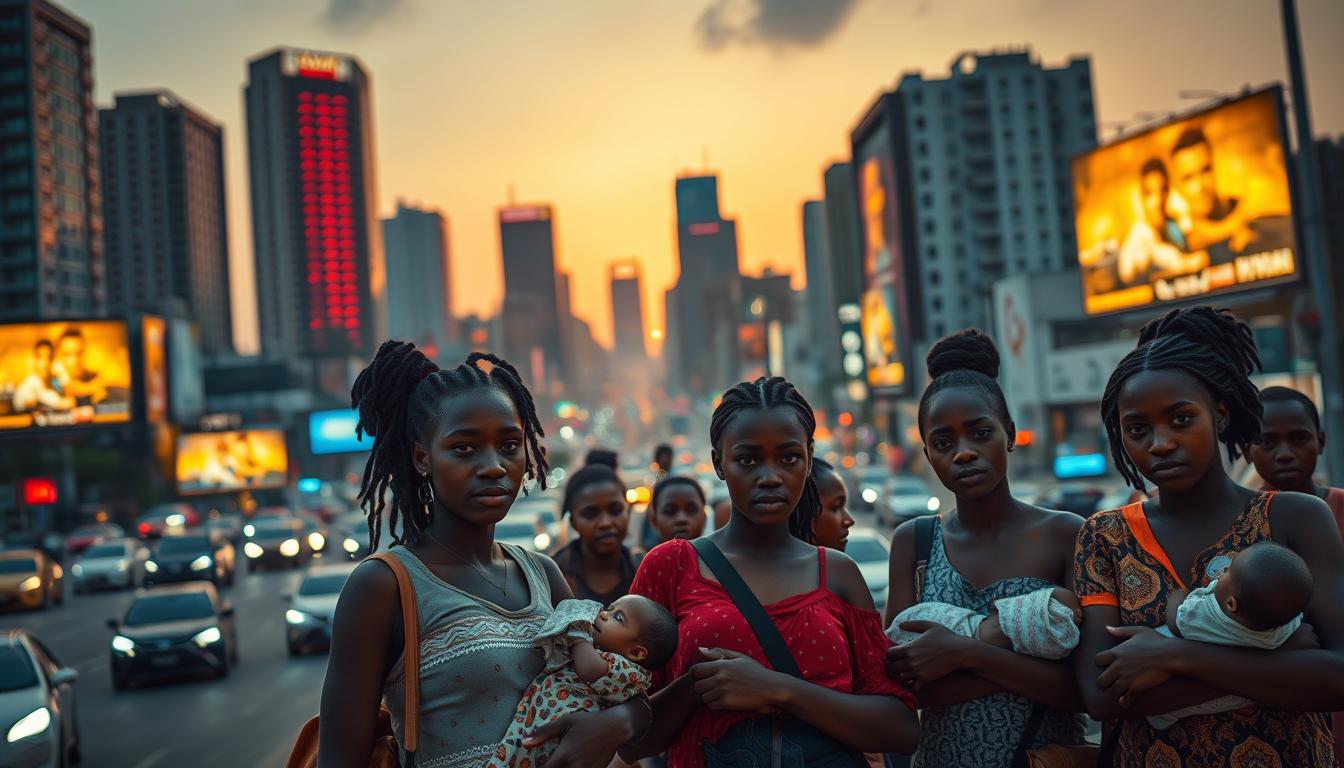
Sub-Saharan Africa has the highest teenage pregnancy rates in the world. An estimated 101 births occur per 1,000 women aged 15–19, almost double the global average1. Every year, about 17 million adolescent girls give birth, mostly in low- and middle-income countries2.
By 2019, adolescents in these countries had around 21 million pregnancies annually3. The high rates of teenage pregnancy in this region are a major concern. Half of all births in sub-Saharan Africa are to teenage mothers1. The global adolescent birth rate has dropped from 64.5 births per 1000 women in 2000 to 41.3 births per 1000 women in 20233.
Teenage pregnancy rates in sub-Saharan Africa are influenced by many factors. These include sociocultural and economic factors, individual factors, and health service-related factors2. Adolescents face a double risk of death from pregnancy-related complications compared to women in their twenties1. In sub-Saharan Africa, pregnancy and childbirth complications are the leading cause of death in young women aged 15–191.
Key Takeaways
- Sub-Saharan Africa has the highest teenage pregnancy rates in the world.
- Approximately 17 million adolescent girls give birth every year, mostly in low- and middle-income countries2.
- The region’s high teenage pregnancy rates are a significant concern, with half of all births in sub-Saharan Africa being to teenage mothers1.
- The global adolescent birth rate has decreased from 64.5 births per 1000 women in 2000 to 41.3 births per 1000 women in 20233.
- Sub-Saharan Africa’s high teenage pregnancy rates are a complex issue, influenced by various factors such as sociocultural and economic factors, individual factors, and health service-related factors2.
- The risk of death due to pregnancy-related complications is double for adolescents compared to women in their twenties1.
Current State of Teenage Pregnancy in Sub-Saharan Africa
Teenage pregnancy is a big problem in Sub-Saharan Africa. The area has an adolescent birth rate of over 100 births per 1,000 women, which is twice the global average as of 20214. This high rate is due to many factors, like socio-economic status and lack of parental support. It’s also because of early marriage and low education among teens. Knowing the teenage pregnancy causes is key to finding ways to stop it.
In 2021, there were 6,114,000 births among 15–19-year-olds in Sub-Saharan Africa, and 332,000 among 10–14-year-olds4. These numbers show we need to act fast to prevent teenage pregnancy. We should focus on giving teens good sex education and access to reproductive health services. It’s also important because teen girls and young women are getting HIV at a high rate5.
Some countries in the region are making progress. For example, a vocational youth training program in the Dominican Republic cut teenage pregnancy by about 20%4. In Colombia, a program that paid teens to stay in school also lowered pregnancy rates5. These examples show that with the right programs, we can tackle teenage pregnancy.
Socio-Cultural Factors Contributing to High Pregnancy Rates
In Sub-Saharan Africa, about 17 million adolescent girls give birth each year. This is mainly in low- and middle-income countries2. Poverty, lack of education, and limited access to reproductive health services are big reasons. In Ghana, South Africa, and Tanzania, poverty leads to young girls being forced into sexual relationships with older men to earn money2.
It’s important to tackle the causes of teenage pregnancy. Unwanted sexual advances, coercive relationships, and gender power imbalances are key factors2. Poverty is a major factor, with 14 studies pointing to it2. Also, not having affordable education and not learning about sexuality are big issues2.
Some main reasons for teenage pregnancy are:
- Poverty and economic instability
- Lack of education and reproductive health services
- Coercive sexual relations and unequal gender power relations
- Misconceptions about contraceptives and non-use
The effects of teenage pregnancy are huge, impacting not just the individual but also their families and communities. We need to tackle the root causes with effective interventions. This includes education, economic support, and community programs3.
Economic Determinants and Their Impact
The economic factors behind teenage pregnancy in sub-Saharan Africa are complex. Poverty and limited resources play a big role. Adolescent girls may see pregnancy as a way to get government support grants6.
This is worrying because teenage mothers face more health risks. These include complications during childbirth, low baby birthweight, and severe neonatal conditions6.
In sub-Saharan Africa, the number of teenage pregnancies is very high. There are about 101 births per 1,000 women aged 15–19, almost double the global average1. Countries like Niger, Mali, and Angola have the highest rates2.
The economic impact on young mothers is severe. They lose education and job opportunities. This increases their risk of poverty and dependence on government support.
Access to healthcare services is key to reducing teenage pregnancy rates. Reproductive health education and contraception access are vital in preventing unintended pregnancies1. But, cultural and economic barriers limit access in many sub-Saharan African countries. This makes the problem worse.
To tackle this, we need economic empowerment for young mothers. This includes vocational training and education6.
We must act quickly to solve the economic issues behind teenage pregnancy. By giving adolescent girls access to education, healthcare, and economic opportunities, we can lower the risk of teenage pregnancy. This will improve the well-being of young mothers and their children2.
It’s vital to tackle the root causes of teenage pregnancy. These include poverty, lack of education, and limited healthcare access. By doing so, we can create a better future for adolescent girls in sub-Saharan Africa.
Educational Barriers and Their Role
Lower education levels might link to more teen pregnancies7. In many Sub-Saharan African countries, girls face limited school access. This can lead to more teen pregnancies. Education helps girls make better life choices.
Some countries are trying to fix these education issues. For example, South Africa, Tanzania, and Uganda support pregnant students and teen moms7. But, we need to do more to ensure all girls get quality education without facing discrimination or stigma.
Statistical data shows 38 out of 54 African countries protect girls’ education during pregnancy and motherhood8. This is a good start. Yet, we need more inclusive education programs for adolescent girls to prevent teen pregnancy.

Education is key to lowering teen pregnancy rates9. Quality education empowers girls to make smart life choices and lowers pregnancy risks. We must keep working to support girls’ education and well-being to prevent teen pregnancy.
Understanding the Health Implications
Teenage pregnancy is a big health risk for both the mom and the baby. The teenage pregnancy impacts on the mom’s health are very worrying. Teens are twice as likely to die from pregnancy problems compared to women aged 20-2410. Also, babies born to teens have a 60% higher chance of dying in their first year compared to those born to moms over 1910.
The teenage pregnancy challenges also affect mental health. Pregnant teens might try to kill themselves up to 20% of the time10. Postpartum depression in teen moms is between 14% to 53%, which is much higher than in older moms10. It’s key to tackle these health issues to lessen the risks of teenage pregnancy.
To lower these risks, we need to make sure teens have access to reproductive health services. This includes prenatal care, birth control, and mental health support. By doing this, we can lessen the teenage pregnancy impacts and teenage pregnancy challenges faced by teen moms. This will help improve their health and well-being4.
Current Prevention Strategies and Interventions
Reducing teenage pregnancy in Sub-Saharan Africa requires a mix of education, economic support, and reproductive health services. About one in five teenage girls in this region get pregnant11. This shows we need specific plans to tackle the main reasons behind teenage pregnancy.
Effective methods include teaching skills, using peer programs, and focusing on abstinence. These have been proven to lower teen pregnancies11. School-based programs also help by teaching teens about contraception and improving their knowledge11. Sadly, over half of unintended teen pregnancies lead to unsafe abortions in poor countries11.
Groups like governments, NGOs, and local organizations are teaming up. They offer education, economic help, and reproductive health services. For instance, programs that mix financial support with health and education lessons can cut down child marriages12. Together, we can lower teen pregnancy rates and better the lives of young girls in Sub-Saharan Africa.

- Education and awareness about reproductive health
- Economic empowerment and support
- Access to reproductive health services
- Community-based initiatives and support
By using these methods, we aim to decrease teen pregnancy rates. This will help improve the global stats on teen pregnancy trends11.
Role of Healthcare Systems and Access to Services
Getting to healthcare is key in stopping teen pregnancy in Sub-Saharan Africa. A person’s economic status affects their healthcare access13. In rural areas, few healthcare spots, limited birth control, and shame in seeking health services block access14. Also, not talking to parents about health can make things worse, making it hard for teens to get the care they need15.
About 16 million girls aged 15 to 19 get pregnant every year, mostly by accident13. The number of teen girls getting prenatal care varies, from 29% in Ethiopia to 93% in South Africa and Kenya13. But, many clinics lack the right tools and staff to give good care14.
To lower teen pregnancy risks, we need better access to health services like education, birth control, and prenatal care15. Governments, NGOs, and local groups can help13. By tackling economic and cultural issues, we can help teens get the care they deserve.
The table below shows how uneven access to maternal healthcare is in Sub-Saharan Africa:
| Country | Antenatal Care (%) | Skilled Birth Attendance (%) |
|---|---|---|
| Ethiopia | 29 | 10 |
| South Africa | 93 | 72 |
| Kenya | 93 | 61 |
Knowing the healthcare access challenges helps us aim for a fairer place for teens in Sub-Saharan Africa14.
Future Outlook and Emerging Trends in Teenage Pregnancy Rates
The future of teenage pregnancy rates in Sub-Saharan Africa is worrisome. Early marriage and low educational status of adolescents are major issues16. Almost all girls who got pregnant as teens are not in school in many countries here. Rates vary from 95% in Zambia to 99% in Tanzania16.
This shows we need to change policies. We must support education and economic growth for teen girls.
Religion also affects views on teen pregnancy17. Most women in Sub-Saharan Africa face strict abortion laws. This calls for better sex education and reproductive health access17.
Abortions in Sub-Saharan Africa have almost doubled from 1995-1999 to 2015-2019. This shows we need strong prevention plans17.

To tackle teen pregnancy, we should boost education and job chances for girls. We also need to offer full sex education and health services16. By tackling the main causes like low educational status of adolescents and early marriage, we can lower teen pregnancy rates in Sub-Saharan Africa16.
Conclusion
Teenage pregnancy in Sub-Saharan Africa is a big problem that needs quick, many-sided solutions18. The numbers are scary, with 24.88% of teens getting pregnant in high-fertility areas18. This shows we must work together to solve this issue.
Helping adolescent girls is key to a better future. The World Health Organization says helping them brings benefits now and later19. By giving them education, jobs, and health services, we can help them avoid early pregnancy.
We need to tackle the many challenges that lead to high teen pregnancy rates in Sub-Saharan Africa1819. By focusing on the needs of adolescent girls, we can help them succeed. This way, they can reach their goals and help their communities grow.
FAQ
What are the current teenage pregnancy rates in Sub-Saharan Africa?
In Sub-Saharan Africa, teenage pregnancy rates are very high. Many countries see rates over 20% among girls aged 15-19.
How do the teenage pregnancy rates in Sub-Saharan Africa compare to the global average?
Rates in Sub-Saharan Africa are much higher than the global average. The region is home to over half of the world’s adolescent births.
What are the main contributing factors to the high teenage pregnancy rates in Sub-Saharan Africa?
Several factors contribute to high teenage pregnancy rates. These include poverty, limited reproductive health services, early marriage, and gender inequalities.
What are the health implications of teenage pregnancy in Sub-Saharan Africa?
Teenage pregnancy poses health risks. It increases the risk of pregnancy and childbirth complications. It also leads to higher rates of sexually transmitted infections and poorer mental health.
What are the current prevention strategies and interventions being implemented to address teenage pregnancy in Sub-Saharan Africa?
Various strategies are being used to prevent teenage pregnancy. These include sexuality education, better reproductive health services, and economic empowerment for girls.
How can healthcare systems and access to services play a role in reducing teenage pregnancy rates in Sub-Saharan Africa?
Better reproductive health services are key. This includes access to contraception, prenatal care, and mental health support.
What is the future outlook for teenage pregnancy rates in Sub-Saharan Africa?
While progress is seen, more work is needed. A multi-faceted approach is required. This includes policy changes, education, economic empowerment, and changing societal attitudes.
Source Links
- Predictors of pregnancy among young people in sub-Saharan Africa: a systematic review and narrative synthesis
- Determinants of adolescent pregnancy in sub-Saharan Africa: a systematic review – Reproductive Health
- Adolescent pregnancy
- Adolescent pregnancy in sub-Saharan Africa – a cause for concern
- Frontiers | Adolescent pregnancy in sub-Saharan Africa – a cause for concern
- The Social and Educational Consequences of Adolescent Childbearing – World Bank Gender Data Portal | World Bank Gender Data Portal
- Africa: Rights Progress for Pregnant Students
- Across Africa, Many Young Mothers Face Education Barriers
- The right to education for pregnant girls and adolescent mothers: Breaking barriers and biases
- Prioritizing the mental health needs of pregnant adolescents in sub-Saharan Africa | Published in Journal of Global Health Neurology and Psychiatry
- Interventions to prevent unintended pregnancies among adolescents: a rapid overview of systematic reviews
- Frontiers | Effectiveness of interventions to reduce child marriage and teen pregnancy in sub-Saharan Africa: A systematic review of quantitative evidence
- Maternal health service utilisation of adolescent women in sub-Saharan Africa: a systematic scoping review – BMC Pregnancy and Childbirth
- Lack of Access to Maternal Healthcare in Sub-Saharan Africa – Ballard Brief
- Determinants of adolescent pregnancy in sub-Saharan Africa: a systematic review
- Education sector response to early and unintended pregnancy: A review of country experiences in sub-Saharan Africa
- From Unsafe to Safe Abortion in Sub-Saharan Africa: Slow but Steady Progress
- Prevalence of teenage pregnancy and its associated factors in high fertility sub-Saharan Africa countries: a multilevel analysis – BMC Women’s Health
- Prevalence of first adolescent pregnancy and its associated factors in sub-Saharan Africa: A multi-country analysis


